

One key can open several doors without giving every keyholder access to the whole building. A master key system for a business in Chester lets one key open two or more locks, while individual keys open only their assigned doors. Access can therefore reflect people’s roles, rather than giving everyone the same level of entry.
Tracking keys across staff areas, tenant spaces and shared entrances can become difficult as a property grows. A clear access hierarchy can simplify day-to-day key management and help businesses and landlords control who can enter specific areas.
This guide explains how master and individual keys work together, how to plan access levels, and where these systems can suit commercial buildings, rental properties and multi-tenanted premises. It also covers practical planning, assigning keys and responding to a missing key, so you can decide whether this approach fits your property.
Key Takeaways
- Plan a clear hierarchy of great grand master, grand master, master and user keys, and limit full-access keys to selected people.
- Keep a record of who holds each key and when it is issued or returned to support organised key management.
- For shared buildings, map tenant doors and communal areas so each occupier’s access matches their needs.
- AE Locksmiths can help businesses and property owners with commercial and residential locksmith work when planning property security.
Why A master key system?
A master key system can reduce the number of keys staff carry while setting access by role. It can also organise entry across one building or several properties.
Humberside Fire & Rescue Service lists 30 fire stations in its area. This is an example of managing access across multiple sites, not a count for Chester or its surrounding area.
Simplifying building key management
A planned system assigns keys to specific doors and people. For example, a staff member may access their work area, while a manager’s key opens additional rooms. This creates access levels without giving everyone a key to every lock. In Chester, a locksmith can survey the doors, identify who needs access, then match cylinders and keys to those requirements. The result is a physical access control system built around how the property is used.
Managing keys across properties
For organisations with multiple properties, a consistent key plan can simplify day-to-day management. A landlord, for example, may need access to each property, while tenants need keys for their own doors. Keep property names and door references distinct in the key register. Electronic key management cabinets can record who takes a key and when, helping authorised staff track returns across sites. A cabinet can store keys securely while keeping them available to authorised personnel.
Keeping key records and handling lost keys
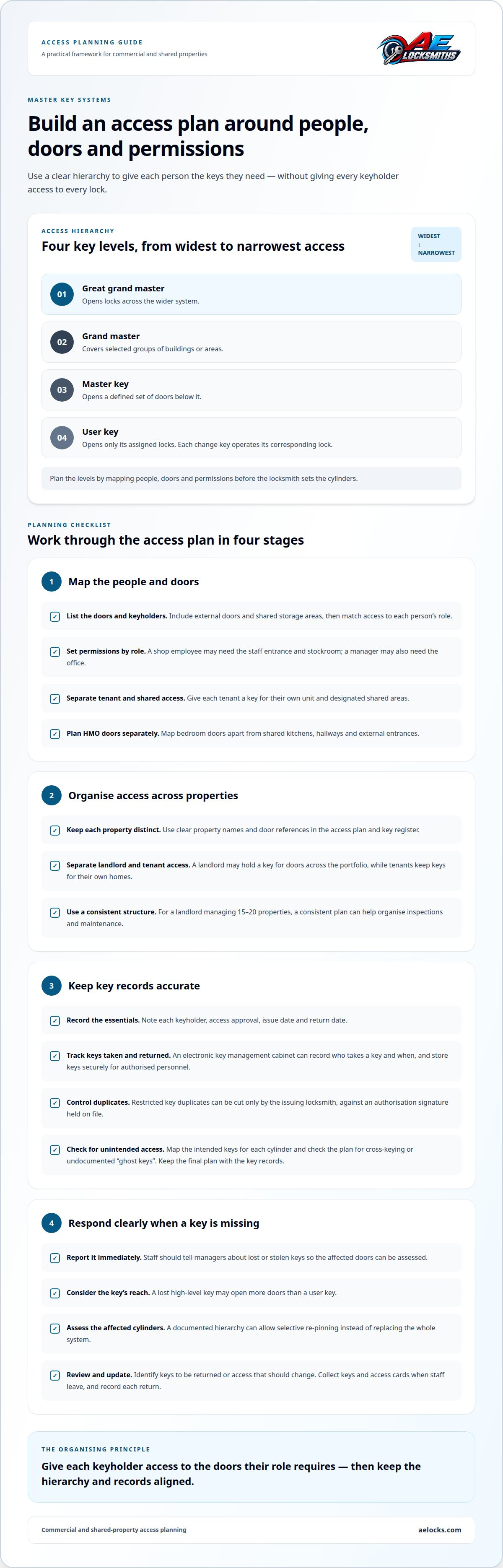
Record each keyholder, access approval, issue date and return date. Staff should report lost or stolen keys immediately so managers can assess which doors may be affected. Restricted key duplicates can be cut only by the issuing locksmith, against an authorisation signature held on file. If a master key is lost, a documented hierarchy can allow affected cylinders to be re-pinned selectively instead of replacing the whole system. Review the register to identify keys that should be returned or access that should change.
Comparing master keys with keyed alike locks
Keyed-alike locks use the same key for every lock in the group. This can suit a small set of doors where every keyholder needs identical access. A master key system gives users keys for designated locks, while higher-level keys open additional doors. Choose according to whether people need different permissions. Maintenance involves keeping the key register current and arranging re-pinning when the access structure changes or a key is lost.
HOW DO MASTER KEYS WORK?
A master key system uses different key levels to match access with responsibility. Its design should show which authorised keyholders can open each door.
Understanding the key hierarchy
A great grand master key sits at the top, opening locks across the wider system. Grand master keys cover selected groups of buildings or areas. Master keys open a defined set of doors, while user keys open only their assigned locks. A master key opens change-key locks below it, and each change key operates its corresponding lock. Planning these levels means mapping people, doors and permissions before a locksmith sets the cylinders.
Reducing cross-keying and ghost keys
Cross-keying occurs when a key opens a lock beyond its intended access. A ghost key is an unplanned or undocumented key that can operate a lock. Both can undermine the hierarchy. A locksmith can map the intended keys for each cylinder, then check the keying plan for overlaps before installation. Keep the final plan with the key records so later changes don’t quietly create unwanted access.
Restricted keys are controlled through the issuing locksmith, with duplicates cut against an authorisation signature held on file. “Restricted” does not automatically mean a key is patented; patent protection depends on the specific design.
The main risk is the reach of a lost high-level key: it may open more doors than a user key. A complex hierarchy also requires accurate records and disciplined key returns. If a key is stolen or not returned, identify the affected cylinders and assess whether selective re-pinning can restore control. Collect keys and access cards when staff leave, and record each return.
For a commercial building, a locksmith can check the access hierarchy, keying plan and cylinders as one job. If you’re reviewing physical access alongside other building security needs, commercial locksmith support can help assess the locks and doors involved.
Master key systems for commercial premises and landlords
Commercial premises need different access arrangements for staff, tenants, managers and maintenance teams. A master key system for a business in Chester can give each group access to the doors it needs while restricting entry elsewhere.
Planning access in commercial premises
Start by listing the building’s doors and the people who need to use them. For example, a shop employee may need the staff entrance and stockroom, while a manager also needs the office. In a multi-tenant building, each tenant can have a key for their own unit and designated shared areas. Include external doors and shared storage areas in the plan. This ties permissions to each occupier’s role without giving every keyholder access throughout the premises.
Managing landlord portfolios
A landlord with several properties can hold a key that opens doors across the portfolio, while tenants keep keys for their own homes. Keep each property and its doors distinct in the access plan, so one tenant’s key doesn’t open another resident’s rooms. For a landlord managing 15-20 properties, a consistent structure can help organise inspections and maintenance. Match keyholder records to the relevant property and cylinders.
Planning an HMO system
For a house in multiple occupation, plan bedroom doors separately from shared kitchens, hallways and external entrances. Residents need access to their own rooms and shared areas, while a landlord or manager may need wider entry for property management. A master key system for a business in Chester can also suit premises with mixed commercial and residential access. Define permissions before ordering cylinders. A typical HMO installation takes one visit once the designed cylinders arrive.
There isn’t one cylinder specification for every building. The right choice depends on the doors, access hierarchy and required security level. A high-security key system may be Kite Marked TS007 3*, but that specification isn’t universal. Match the cylinder and key arrangement to the property’s access needs.
Systems for commercial, residential and multi-tenanted properties
One access plan can cover a business, homes above its premises and shared entrances. The key decision is whether each person needs physical keys, electronic access, or both. Map each door against its users before choosing a system.
In a commercial building, an individual key can open an employee’s work area, while restricted access keeps offices or stores limited to authorised staff. Electronic access control can add time controls and make it easier to remove a former employee’s access. For example, a business can separate staff entrances from areas holding sensitive records or equipment.
Residential properties need a different balance. A tenant should reach their own home and agreed shared spaces, without gaining access to another resident’s rooms. A supported-living access-control example covers 16 bedroom doors, illustrating how each room can have an individual access arrangement alongside shared areas.
For multi-tenanted premises, plan tenant doors, communal entrances and maintenance access together. Each tenant can hold a key for their own unit and designated shared areas. An estate agent or property manager may retain separate access for inspections and maintenance. Record which keys open each area, and update permissions when a tenancy or staff role changes.
Emergency arrangements also matter. An access control system can unlock all doors without keys so building users can exit. This is distinct from a mechanical master-key arrangement, so decide how electronic controls and physical keys work together. For your commercial or residential property, speak to a locksmith about your access needs.
AE Locksmiths
AE Locksmiths helps businesses and property owners plan practical lock and access arrangements through its commercial and residential locksmith services. For a master key system, the work starts by understanding the property’s doors, who needs access and which areas should remain restricted. This gives the system a clear purpose, whether you manage business premises, rental homes or a mix of shared and private spaces.
AE Locksmiths also helps with related security needs, including UPVC Windows & Doors and Safe Access. If your property’s locks or entry arrangements need attention, a locksmith can assess the situation and discuss a suitable next step. Contact AE Locksmiths to discuss your property’s access requirements.
Plan access that can adapt
A master key system for a business in Chester should support how the property is used now and how access may need to change. A new tenant, revised staff responsibilities or a change of use can affect who needs entry. Build review points into your access plan so permissions don’t remain in place after they’re no longer appropriate.
The next step is to discuss the property’s layout and intended access with a locksmith. This can help shape an arrangement around the people who use the building, rather than applying the same pattern to every door. AE Locksmiths can discuss your requirements and practical options for your premises.
Contact AE Locksmiths to discuss your master key requirements and take a considered next step for your property’s security.
Frequently Asked Questions
Why Invest in a Master Key Suite?
A master key suite can make access simpler to administer as staff, rooms or tenants change. It gives an organisation a planned structure, rather than relying on separate keys for every door or sharing one key broadly. For example, when a department moves offices, the access plan can show which keys and cylinders need updating. This helps managers review permissions and keep key records useful over time.
What is a master key system and how does it work for a business?
It’s a group of locks arranged to work with individual keys and higher-level keys. For example, a receptionist could hold a key for the reception area, while an authorised manager’s key also opens an office. The lock cylinders are set to recognise assigned keys. Before planning the system, a business should consider which doors need to operate independently and which roles need wider access.
What types of locks and keys can be included in a business master key system?
Compatible cylinder locks can be arranged for a master key system, with keys assigned to individual users and management levels. Pin tumbler locks are a common mechanism for this type of arrangement. The doors and existing cylinders matter: a locksmith assesses their suitability and the required access pattern. Electronic fobs or cards use a different access method, so plan them as a separate part of the property’s security arrangements.
How long does it take to install or upgrade a business master key system?
Timing depends on the number and type of doors, the existing cylinders and the design work needed for the access plan. The locksmith first assesses the premises and maps the required permissions. The system can then be installed once the designed cylinders are ready. An upgrade may also involve changing selected cylinders, so the work scope and building layout affect the schedule.
What security standards apply to commercial master key systems in the UK?
A high-security key system may be Kite Marked TS007 3*, but that specification is not universal. Choose cylinders to suit the doors, access hierarchy and required security level.


