

Changing the locks after moving into a new home in Warrington helps prevent anyone with an old key from entering. The safest approach is to replace all the locks, rather than assume the previous occupants handed over every copy. It’s a practical first step towards making the property yours.
It’s natural to wonder whether every lock needs changing, especially when the doors look secure. This guide explains when to arrange a replacement, which door types and lock systems may be involved, and what to consider before the work.
You’ll also learn what to consider if a lock is worn, damaged or difficult to operate, and how to understand whether a locksmith serves your part of Warrington. That way, you can make a clear decision about your new home’s security and the next step.
Key Takeaways
- Replacing locks after moving helps prevent access by anyone who may still have an old key; assess every external door, not just the front entrance.
- Lock types vary across uPVC, composite, aluminium and wooden doors, so the door’s locking mechanism affects the right replacement and fitting approach.
- Urgent lock changes and security upgrades depend on the fault, the lock system and the work required. Learn what to consider when arranging a locksmith in Warrington.
- AE Locksmiths provides residential locksmith services, including help with home lock changes and security needs across its service area.
Need a Locksmith in Warrington?
In Warrington, lock changes can address lost keys, break-ins or worn mechanisms. The right work depends on the door and its lock.
Same-day lock changes
A same-day request may follow lost keys, a break-in or a lock that has left the door unusable. First, identify which doors need attention and whether each lock still turns. A repair may resolve a fault; replacement is appropriate when the lock is damaged or your security needs have changed. Same-day describes the requested timing, not a guaranteed completion time.
Domestic door lock replacement
For domestic door lock replacement in Warrington, note the door type and whether the handle, key or mechanism is causing trouble. Most standard lock fitting in Warrington can be completed within an hour; complex installations or smart lock setups may take longer. If you rent, check your tenancy agreement and discuss changing locks with your landlord before proceeding. If you need to change locks in a new home in Warrington, list each external door before arranging the work.
Security upgrades and anti-snap cylinders
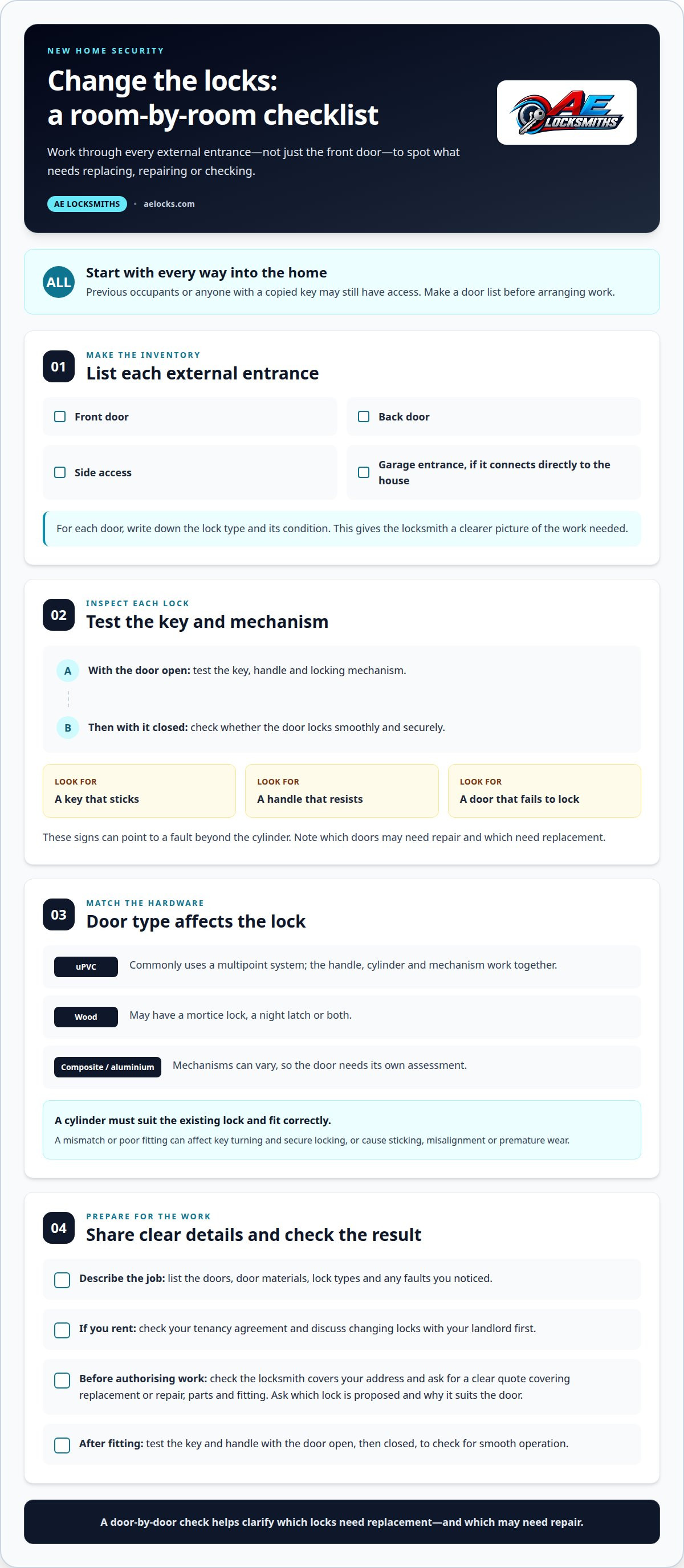
An upgrade might involve replacing a worn cylinder or choosing an anti-snap cylinder for a compatible door. The cylinder must suit the existing lock and fit correctly; a mismatch can affect how the key turns or how securely the door locks. Poor fitting can cause sticking, misalignment or premature wear. Before changing locks in your new home in Warrington, consider the condition of each lock and the type of door.
Choosing a Warrington locksmith
Before hiring, check that the locksmith covers your part of Warrington and can work with your door and lock type. Get a clear quote covering replacement or repair, parts and fitting before authorising work. Ask what lock is proposed and why it suits the door. After fitting, test the key and handle with the door open, then closed, to check smooth operation.
Warrington and surrounding-area coverage
A locksmith’s service area matters if you’re locked out, have lost keys or need a damaged door lock replaced. Give your full Warrington postcode, not just the town name. Include the neighbourhood or a nearby landmark, especially if the property is on a new estate or a street with a similar name elsewhere. When planning to change locks in a new home in Warrington, provide the postcode when describing the job.
Coverage can differ between a town-centre address and a property near the edge of Warrington. Explain whether you need entry after losing keys, a replacement after burglary damage, or a planned lock change. Then ask whether the locksmith covers that exact address and type of work. A clear description helps distinguish an urgent access problem from scheduled work at a home or business.
When arranging help, provide the full postcode and say whether the entrance faces a main road, shared courtyard or private drive. Add access details, such as a gated entrance or parking restrictions. If you’re locked out, explain whether the key is missing, the lock is jammed or the door has visible damage. These details help the locksmith understand the location and issue before attending.
Nearby villages and postcodes can fall outside a service boundary, even when they’re close to Warrington. Don’t assume that a locksmith covering the town automatically covers every surrounding address. For example, if you’re on the outskirts and need to change locks in a new home in Warrington, give the postcode first, then the nearest town or landmark. That makes the location clear and helps establish whether the requested service covers your property before arrangements are made.
UPVC, composite, aluminium and wooden door locks
Door material helps determine which replacement lock will fit. A uPVC door commonly uses a multipoint system, while wooden doors may have a mortice lock or night latch. Composite and aluminium doors can use different mechanisms too. Identify the door material and describe how the handle and key behave before arranging work. Those details help assess the likely system.
On a uPVC door, the handle, cylinder and multipoint mechanism work together. If lifting the handle becomes stiff or the key turns without securing the door, the fault may involve alignment or the mechanism, not just the cylinder. A replacement cylinder must suit the existing arrangement. After fitting, operate the handle and key with the door open, then check that the closed door locks smoothly.
Composite and aluminium doors need their own assessment, since a lock that suits one door may not fit another. For a wooden front door, check whether it has a mortice lock, a night latch or both. Note any sticking, loose handles or visible damage. A commercial locksmith can also assess a business entrance, where the door’s use and existing hardware help determine the replacement.
Check UPVC Windows & Doors separately: a working door lock doesn’t mean the window locks operate properly. Record which doors or windows need attention, and share the lock type or a clear description. An emergency locksmith can assess a locked door and consider non-destructive entry before work that risks damage. For a planned upgrade, ask how the proposed cylinder or mechanism suits that specific door. British homes have varied door designs, so matching the hardware matters more than choosing a lock by appearance alone.
Changing locks after moving into a new home
After moving, changing the locks helps prevent previous occupants or others with copied keys from entering. Start with every external entrance, including the front door, back door and any side access. Make a simple list of the doors, then note each lock’s type and condition. Include a garage entrance if it connects directly to the house.
Next, test each key and locking mechanism with the door open, then closed. A key that sticks, a handle that resists or a door that fails to lock can signal a fault beyond the cylinder. Note which doors need replacement and which may need repair. This gives the locksmith a clear picture of the work before installation begins.
Include accessible windows in your security review. Check that each window closes properly and its lock operates, rather than assuming new door locks secure the whole home. Record any stiff handle or damaged mechanism separately. On uPVC doors, the multipoint locking system and cylinder need to work together; replacing only one part may not resolve a wider fault.
Review your home insurance documents for any specified lock types or standards. An insurer may set conditions, so compare those requirements with the proposed lock before approving the work. Ask whether the selected cylinder or mechanism meets the conditions stated in your policy. Keep the paperwork with your moving documents, alongside the new keys and any record of completed lock changes.
For a new home with uPVC doors or windows that need attention, arrange help with door and window locks as part of your move-in security checks.
Many households make lock replacement part of moving in, since previous occupants may otherwise retain access to the property. A locksmith can explain the available options in light of your insurer’s requirements.
AE Locksmiths: Residential Locksmith
AE Locksmiths provides residential locksmith services for homeowners planning to change locks in your new home Warrington or dealing with a faulty door lock. If you’ve moved recently, lost keys or found a mechanism sticking, the team can assess the lock and the work needed. Its uPVC windows and doors service can help when uPVC door or window locks and fittings need attention.
AE Locksmiths also provides commercial locksmith services for business premises, as well as safe access for people who need help with a safe. These services address different security needs, so focus on the specific door, window or safe causing concern. Share the issue and property type when you get in touch.
Contact AE Locksmiths to discuss lock changes or other home security needs.
Set up a clear plan for your new home
Make lock changes part of your move-in routine, rather than a job to revisit months later. If you’re planning to change locks in your new home in Warrington, keep a simple record of which doors were updated and where you store the new keys. Avoid labelling keys with your full address. Once the work is done, test each lock yourself and make sure everyone in your household knows which key opens each door.
For your next step, note any sticking handles, damaged fittings or doors that still need attention. This gives you a useful starting point when discussing the work, without guessing which mechanism needs replacing. AE Locksmiths can help with residential lock needs and related property security work. Contact AE Locksmiths about your locks to discuss the next step for your home. A clear plan can make settling in feel more straightforward and help you take charge of your new home’s security.
Frequently Asked Questions
Which locksmiths in Warrington offer new-home lock changes?
A+E Locksmith provides residential locksmith services for homeowners in Warrington who need new-home lock changes. When describing the job, mention whether you’ve just moved in, whether all keys are accounted for, and which entrances need attention. For a business property, A+E Locksmith also provides commercial locksmith services. Clear details help the team understand the lock work you need.
What types of locks meet UK standards for a new home?
There isn’t one lock type that suits every UK home: the door design and any conditions in your insurance policy matter. For example, a wooden door may use a mortice lock, while a uPVC door commonly has multipoint locking. BS3621:2007 is an example of a standard associated with a five-lever mortice sashlock, not a universal requirement for every door.
Should I change or rekey locks when moving into a new house?
Replacing a lock or cylinder gives you a new set of keys; rekeying changes the existing cylinder so previous keys no longer work. The right option depends on the lock’s condition, compatibility and whether you want to keep the existing hardware. For example, a sound cylinder may be suitable for rekeying, while damage or a change in security needs may favour replacement.
How soon after moving in should I change the locks?
Arrange lock changes as soon as practical after taking possession, ideally before relying on the keys handed over during the sale or tenancy. Previous occupants, contractors or other key-holders may have copies. If a key is missing or the lock is damaged, prioritise that entrance. List the external doors and plan the work around access to each one.
What are the risks of changing a lock yourself?
A poorly fitted lock can compromise security, cause sticking or misalignment, and wear prematurely. Any replacement also needs to suit the door and its existing locking system.


