

Change the locks on moving day. Include every external entrance, as previous owners, estate agents or tradespeople may still have keys. For wooden doors, most UK home insurers require a BS3621 5-lever mortice deadlock. If you’re moving house, changing the locks in Liverpool can help you regain control of who has access.
It’s understandable to assume the keys handed over at completion are the only copies in circulation. But earlier keyholders may still have access. A lock-change price depends on the lock type, number of doors, condition of the existing hardware and time of day, and is given after a quote request.
This guide explains when to replace locks, what affects the cost and how to compare your locks with your insurer’s requirements. You’ll also find practical steps for checking every external door and deciding what needs attention, whether you’ve moved into a new-build or an older home.
Key Takeaways
- Replace locks on external doors when you move in, so previous keyholders cannot rely on old copies for access.
- For wooden doors, check whether your insurer requires a BS3621 5-lever mortice deadlock and make sure your fitted lock meets the policy terms.
- At a tenancy changeover, remember that UK landlords are not legally required to change the locks, so agree who will secure the property.
- Work out what needs changing by checking each door, lock type and condition, then consider whether your new home needs a wider security review.
Are your locks insurance approved?
Insurance and home security requirements can affect which door lock you choose after moving. Most UK home insurers require a BS3621 5-lever mortice deadlock on wooden doors. Changing locks after moving is also a practical security step because previous owners, agents or tradespeople may still have key copies.
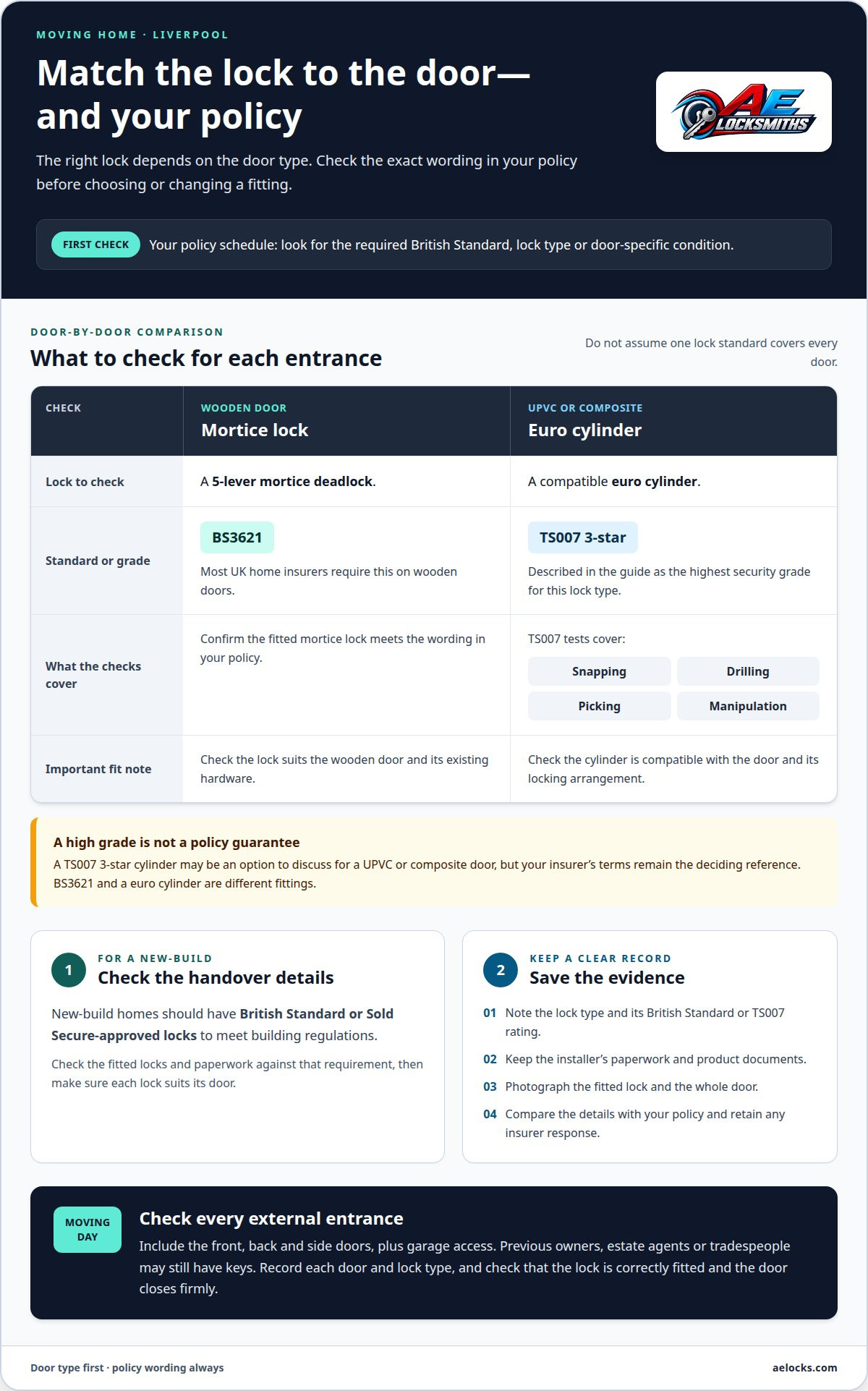
Check your policy schedule for the exact lock wording before upgrading. Look for any required British Standard, lock type or door-specific condition. A BS3621 mortice deadlock is relevant to a wooden door; it is not the same fitting as a euro cylinder used on many UPVC and composite doors. Match the lock to the door and the policy, rather than assuming one standard covers every entrance.
For a euro cylinder, TS007 3-star is described as the highest security grade for this lock type. Its tests cover snapping, drilling, picking and manipulation. This can be a suitable option to discuss for a UPVC or composite door, but your insurer’s terms remain the deciding reference. A high security rating alone does not prove that a lock meets every policy condition.
Keep a clear record of any lock changes. Recording what was fitted makes it easier to check the work against your insurance documents:
- Note the lock type and British Standard or TS007 rating.
- Keep the installer’s paperwork and any product documentation.
- Photograph the fitted lock and the whole door for your records.
- Compare the details with your policy schedule and retain any insurer response.
For locks across Liverpool, check that the chosen mortice lock or cylinder suits the door’s design and existing hardware. Incorrect sizing can leave the lock poorly fitted, so the product and installation both matter. New-build homes should have British Standard or Sold Secure-approved locks to meet building regulations; check the fitted locks and documents against that requirement.
If you’re looking for an MLA-approved locksmith in Liverpool, verify current membership with the Master Locksmiths Association. Before installation, agree in writing on the lock type and work, then keep the paperwork with your insurance records.
How much does a lock change cost in Liverpool?
The price depends on the case and is given after a quote request. The main factors are the lock type, how many doors need work, the condition of existing hardware, and the time of the appointment. A euro cylinder replacement is different from replacing a mortice lock or repairing a damaged front door mechanism.
For landlords, a tenancy changeover is a useful time to review access. UK landlords are not legally required to change locks between tenancies, but a previous tenant may still have a key. Consider changing the relevant locks before a new tenant moves in. A Liverpool landlord may need to secure several doors, not just the front entrance.
If you move in without receiving every key, arrange a lock replacement so missing copies no longer work. The right option depends on the lock: a euro cylinder can often be replaced without changing the whole mechanism, while a worn mortice lock may need repair or replacement. Act promptly if keys are lost or stolen, especially if they can be linked to your address.
- List each external door and note its lock type.
- Tell the locksmith whether keys are missing, stolen or simply unaccounted for.
- Describe any sticking, damage or repairs needed to the door or lock.
- Ask for the quoted work and any time-related charges to be clear before proceeding.
A damaged mechanism can also affect the work, since replacing a lock alone may not fix a door that does not close properly. Share these details when requesting a quote to help establish what the job involves.
For a move-related change, lock-change support can help address missing keys and lock issues. Landlords and tenants should also agree who will arrange access changes and retain the paperwork for the property record.
Changing locks when moving into a new home
On moving day, list every external entrance, including the back door, side door and garage access. Previous owners, estate agents and tradespeople may still have keys. Changing locks on all external doors prevents old copies from operating them. Across Merseyside, include less-used entrances in your home security plan, not just the front door.
Check each door before choosing a replacement. A UPVC door often uses a euro cylinder, while a wooden door may have a mortice lock. Confirm the lock’s size and fit: a poorly fitted lock can compromise security. Look for loose doors or exposed locks, and arrange repairs where needed.
Reassess the property after moving in, even if its security was checked before purchase. Walk around outside and secure, remove or hide objects that could help someone climb onto the property. Check that doors close firmly and locks engage properly. These checks can reveal issues missed during a viewing or earlier assessment.
- Record each external door and its lock type before arranging replacements.
- Check whether a cylinder or the full locking mechanism needs changing.
- Look for loose door fittings, exposed locks and gaps around the frame.
- Move or secure outdoor items that could provide a climbing foothold.
For a new-build home, British Standard or Sold Secure-approved locks should meet building regulations. Check the fitted locks and paperwork as part of your handover, then match the hardware to each door. A BS3621 mortice lock may suit a wooden entrance, while a UPVC door needs a compatible cylinder. The right choice depends on the door and its locking arrangement.
Some new-build owners choose keyed-alike locks, where one key opens multiple doors. This can simplify access, but each lock still needs to suit its door. If tenants will move in later, plan access before handover and record which keys operate each entrance.
Changing locks after moving house
If you’ve already moved in, changing the locks is still a practical step. A previous owner, estate agent or tradesperson may have kept a spare key. The decision is not just about the date you moved. Check who could hold copies, whether keys are missing and whether each door locks properly. A UK finding says 32% of people still have a key to at least one previous home.
Is it better to rekey locks or replace them when moving house? For many euro-cylinder doors, replacing the cylinder changes which keys operate the lock while keeping the existing door hardware. A mortice lock may need full replacement if it is worn, damaged or unsuitable. The door, lock type and condition determine the practical option.
Start with a door-by-door review. Check that each lock turns smoothly, the door closes securely and the key works from both sides where applicable. Note any stiff fitting or damage. A single euro-cylinder change on most UPVC doors takes 10-20 minutes. A package of 3-5 locks typically takes 45-90 minutes, depending on door types and the number of locks.
- List every external door and identify its lock type.
- Gather the keys you received and label any spare key.
- Note doors that stick, fail to latch or have damaged fittings.
- Keep a record of the replacement locks and keys after installation.
If a key is lost or stolen, or you cannot secure the property, treat access as urgent. An emergency locksmith can assess the lock and door before fitting a replacement. In a Liverpool city-centre flat, for example, a faulty front-door cylinder may need attention before other planned upgrades. Avoid forcing a stiff lock, as this can damage the fitting and complicate the repair.
For a planned lock change or an urgent problem, arrange residential lock help to address the doors and locks that need attention.
AE Locksmiths: Residential Locksmith
AE Locksmiths provides residential locksmith support for homeowners changing locks after a move. If keys are missing, a lock feels unreliable or you want to change access to an external door, arrange the work. The lock and fittings on a uPVC door need to suit each other. AE Locksmiths also works with uPVC Windows & Doors, which can be relevant when door hardware needs attention alongside a lock change.
Before arranging work, note which doors need changing, the lock type and any faults, such as a stiff key or loose handle. This gives you a clear starting point for discussing the job. Contact AE Locksmiths to talk about your home's lock requirements or visit aelocks.com.
Make your next move with confidence
Moving into a new home is a chance to decide who can enter and how each door secures. Before arranging work, note the doors, existing lock types and any concerns about missing keys or worn fittings. This gives you a practical starting point for deciding what needs attention, rather than changing hardware without a plan.
If you’re planning to change locks after moving house in Liverpool, A+E Locksmith can help with residential and commercial locksmith needs, including UPVC Windows & Doors. Share which entrances need attention and any faults you’ve noticed, so the conversation can focus on your property and the work involved.
Take the next step when you’re ready. Contact AE Locksmiths to discuss your lock change and move forward with a clear plan for your new home.
Frequently Asked Questions
When Should You Change Your Locks?
Change locks before or as soon as you take possession if you can’t account for every key. Act promptly after keys are lost or stolen, or when someone who no longer needs access still has a copy. A property sale or tenancy handover doesn’t invalidate old keys: changing the lock or cylinder is what changes which keys operate it.
Can you upgrade my locks to prevent lock snapping?
Yes. For suitable UPVC and composite doors, a TS007 3-star euro cylinder is tested against snapping, drilling, picking and manipulation. This offers resistance to those attack methods, but no cylinder makes a door impossible to force. The cylinder must fit the door correctly, and the door’s other hardware matters too. Check the rating against your insurer’s terms.
How do I assess the security of my new home?
Check each entrance systematically. With the door open, test whether the key and handle operate smoothly. Then close the door and confirm the latch engages without forcing it. Look for loose handles, damaged frames and exposed cylinders. Check accessible windows and secondary entrances too. Write down faults by door to prioritise repairs and lock changes.
Need Lock Replacement in Liverpool Today?
AE Locksmiths provides 24-hour emergency lockout services for residential and commercial customers across Merseyside and surrounding areas. For emergency jobs, AE Locksmiths aim to get to all emergency jobs within 20 minutes of your call. All parts come with a full 12-month guarantee. If you’re locked out or a damaged lock leaves your home unsecured, explain the problem and your location when contacting the team.
What types of locks do you install?
Lock options include euro cylinders for suitable UPVC and composite doors, and mortice locks for wooden doors. For euro-cylinder replacements on UPVC and composite doors, TS007 3-star anti-snap cylinders are fitted as standard. A BS3621 5-lever mortice deadlock is relevant for wooden doors where policy terms require it. The door design and your insurer’s requirements guide the choice.
Should you change the locks when moving house in Liverpool?
Yes. Changing locks after moving house in Liverpool helps ensure old keys no longer operate your external doors. The keys handed over at completion or tenancy changeover don’t show whether extra copies exist. Prioritise everyday entrances, then include side and rear doors. Keep the new keys together and record who receives each copy.


