

A secure entrance is useful only if the right people can get through it. Access control systems for a small business in Wirral manage who can enter selected areas using options such as key cards, fobs or PINs.
Permissions can be set for individuals or roles, then updated as staff, premises or working patterns change. You can start with the doors that matter most and expand to more entry points or sites, without giving every user the same access.
Access control can record entry and exit activity, helping you review who accessed an area and when. Some systems connect controlled doors with CCTV, alarms and fire safety measures. The right design depends on how you use your premises, which areas need restrictions and how the business may develop. This guide covers the basics, planning for expansion and professional installation, so you can make a practical, informed decision.
Key Takeaways
- Start by identifying which doors and areas need restrictions, then match permissions to staff roles and visitor needs.
- Plan for growth by considering how additional entry points or sites could be added without redesigning the whole setup.
- Think about how access records and connected security measures could support day-to-day oversight and incident reviews.
- A professional installer can assess the premises, design a suitable layout and explain how the system will be installed and configured.
1. Systems that scale across sites and entry points
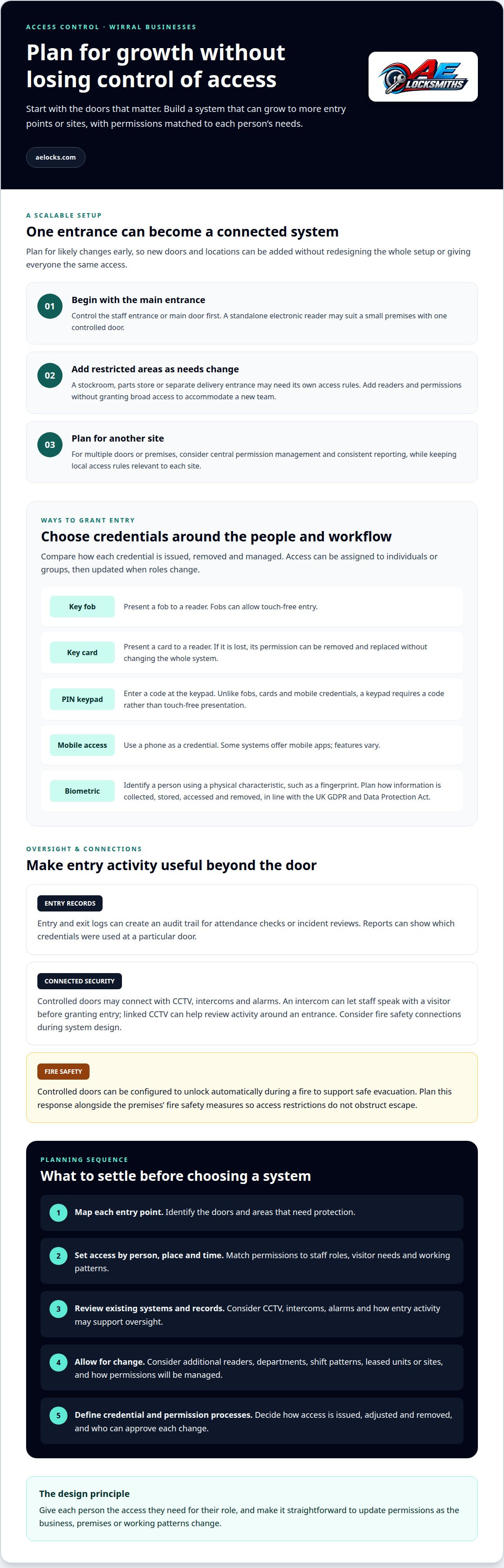
A scalable setup can begin with one staff entrance and expand as a business adds doors or premises. For example, a Wirral office might first control its main entrance, then add a stockroom or a second site. Choosing a system that supports additional readers and permissions helps keep access connected. Access control systems for a small business in Wirral should meet current needs while allowing for planned growth.
Entry and exit logs record access activity, creating an audit trail for attendance checks or incident reviews. Reports can show managers which credentials were used at a particular door. If a key card or fob is lost, its permission can be removed and replaced without changing the whole system.
Doors can also be integrated with CCTV, intercoms and alarms. An intercom, for example, lets staff speak with a visitor before granting entry, while linked CCTV can help review activity around a controlled entrance. This can support investigations into suspected unauthorised entry. Consider fire safety connections during system design.
Key fobs and key cards are presented to a reader; a keypad uses a PIN, while mobile access uses a phone. Biometric access identifies a person through a physical characteristic, such as a fingerprint. Fobs, cards and mobile credentials can allow touch-free entry, while keypads require a code.
A standalone electronic reader may suit a small premises with one controlled door. Multiple doors or sites need central permission management and consistent reporting. Some systems offer mobile apps, but features vary. Compare how credentials are issued, removed and managed. Access control systems for a small business in Wirral should suit staff needs, visitor access, site layout and future plans.
Before choosing a system, map each entry point and decide who needs access, where and when. Then consider existing CCTV or intercoms, entry records, and how easily the setup can accommodate new doors or sites.
2. What is Access Control?
Access control determines who may enter particular parts of a business premises. A receptionist, for example, might need access to the entrance and office, while a storekeeper also needs the stockroom. Electronic permissions mean you do not have to give everyone the same physical access. Assign them to individuals or groups, then update them when someone’s role changes.
Time restrictions can match entry rights to working patterns. A cleaner might need access before opening, while a visitor’s permission could apply only during a scheduled appointment. Systems can apply these rules automatically, reducing the need for staff to supervise each entrance. A clear process for issuing and removing credentials also helps keep access up to date.
Role-based permissions group access by duties, such as administration, deliveries or facilities. This can simplify changes when staff join or move teams, while individual permissions may work better for unusual responsibilities. For biometric access, plan how information is collected, stored, accessed and removed. Under the UK GDPR and Data Protection Act, make privacy and data handling part of the design, rather than treating a biometric reader as a routine door fitting.
Cloud-based access control lets authorised managers administer permissions through an online service. Consider its reliance on network access for remote management and the security of accounts and hosted information. Decide who can sign in, how access is protected and what happens to local entry arrangements during an internet or service outage. A cloud connection does not remove the need to manage credentials carefully.
To choose a suitable system, list the areas that need protection, who needs access, and when they need it. Then compare staff and visitor workflows, privacy considerations, existing doors, and how permissions will be managed as the business changes. These decisions help define the required investment and avoid paying for controls that don’t solve a real access problem. For help planning physical entry arrangements, explore safe access solutions.
3. Scalable access control for small and large businesses
A small business can start by controlling its main entrance, then extend access as operations change. A workshop, for example, might add a restricted parts store when stock handling moves on site. A flexible system lets authorised users and new entry points be added without giving every employee identical access. Access control systems for small businesses in Wirral can be planned to develop alongside the organisation.
Growth can mean more than adding doors. A business opening another Wirral premises may want managers to administer permissions across both locations while keeping local access rules relevant to each site. A networked arrangement can bring the locations under one management approach. Planning this structure early helps avoid disconnected systems and repeated administration as the organisation expands.
Map likely changes before choosing a system. Consider whether the business may add departments, shift patterns, leased units or a separate delivery entrance. Each change affects who needs access and where. A well-planned design provides a clear route for adding readers and updating permissions, rather than granting broad access to accommodate a new team. For a growing Wirral business, this makes future expansion part of the initial plan.
Fire safety must shape the design. Controlled doors can be configured to unlock automatically during a fire to support safe evacuation. Plan this response alongside the premises’ fire safety measures so access restrictions do not obstruct escape. The required arrangement depends on the doors being controlled and how people leave the building.
As employees join, change roles or leave, their access rights need to be updated. Set a clear process for creating, adjusting and removing permissions, and define who can approve each change. A new department, for instance, could receive access to its work area without gaining entry to storage or administration rooms. Review the setup when the organisation adds a site, changes its layout or changes how teams use the premises. This keeps access aligned with operational needs, not unrestricted.
4. Working with a professional installer
Installation starts with a survey of the premises, doors, entry routes and existing security devices. The installer can then plan reader positions, cable routes and how each controlled door should operate. A glass entrance and a staff-only internal door, for example, may need different hardware. The plan should also account for the building environment and safe exit arrangements.
Before fitting equipment, the installer agrees the system layout and access requirements with the business. They then fit and connect the devices, configure permissions and test each reader. They should also check how the system responds to lost credentials and whether connected equipment works as intended. Staff need clear instructions for everyday use, including how authorised access is issued and removed.
Aftercare matters because hardware and permissions can change. Routine maintenance includes checking readers and door hardware, updating software, reviewing permissions and testing alarm-system integration. A new starter, leaver or department change is a useful prompt to review individual access. The business should also know who manages routine updates and how faults are reported.
Ongoing maintenance and subscription costs depend on the system, number of devices, software arrangements and support required. The equipment, installation scope and ongoing service needs determine the cost. AE Locksmiths offers a free quote, and if a visit is needed to provide it, the site visit is free too.
Wirral businesses can look for a commercial locksmith or security installer that assesses the premises, plans the installation and supports the system afterwards. Ask for a clear scope covering hardware, configuration, testing and aftercare, rather than a device-only proposal. To discuss a suitable setup, arrange an access-control assessment and explain your entry points, staff needs and plans for growth.
AE Locksmiths: Safe Access
A+E Locksmith is a family-run, independent local locksmith serving Wirral and surrounding areas. Its Safe Access service can help when you are reviewing how people enter or secure a business space, while Commercial Locksmith support covers physical locks and doors.
If staff access needs have changed after a workspace move, consider how door security fits the new layout and daily use. If the issue involves a lock or door rather than managing electronic permissions, a locksmith service may be the more suitable next step. A+E Locksmith also provides Residential Locksmith and UPVC Windows & Doors services for relevant property needs.
Contact A+E Locksmith to discuss your premises and the access support you need.
Plan the next step for your premises
Plan access around how your premises may work in the future, not just how to secure today’s entrance. Changes to staff roles, room use or building layout can affect who needs access. A clear plan helps keep security aligned with daily operations as the business develops.
For access control systems for a small business in Wirral, A+E Locksmith can help you consider Fob & Card Entry and Safe Access alongside your premises’ physical security needs. Its services also include Commercial Locksmith, Residential Locksmith and UPVC Windows & Doors, supporting different property requirements.
Set out the doors or areas you want to manage and the access problem you need to solve. That gives you a practical starting point for discussing the next steps. Contact AE Locksmiths to talk through your premises and access requirements, and take the next step with confidence.
Frequently Asked Questions
What is Access Control?
Access control manages who can enter particular doors or areas. A small office, for example, could allow all staff through the main entrance but restrict access to a records room. A credential, such as a card or PIN, identifies the user to the system. Permissions determine whether that credential can unlock the selected door.
What types of access control systems are suitable for small businesses?
Key fob and card entry, keypads, mobile credentials and biometric readers are possible options. A small business choosing access control systems in Wirral can compare how staff and visitors will enter, how credentials are managed and which areas need restricted access. For example, a card may suit regular staff, while a temporary visitor process can avoid issuing ongoing access.
How much does access control installation cost in Wirral?
Installation cost depends on the number and type of doors, required hardware, existing wiring and connections to other security equipment. A single entrance differs from a multi-door site with controlled staff areas. A+E Locksmith offers a free quote, and if a site visit is needed to provide it, the visit is free.
How is access control installed in an existing commercial building?
Installation begins with an assessment of the doors, locks, power and cable routes already in the building. The installer plans reader positions and checks how each door should operate, including exit arrangements. Hardware is then fitted and connected before credentials and permissions are configured. Testing every door and showing staff how to use the system helps prepare the premises for everyday operation.
Can access control systems integrate with CCTV, alarms and staff attendance systems?
Access control can integrate with CCTV and alarms, helping businesses connect door activity with other security measures. Entry records can support attendance reviews, but not every system connects directly to an existing staff attendance platform. Include the specific CCTV, alarm and attendance equipment in the project scope so the proposed setup accounts for those requirements.
What questions should a Wirral business ask before getting an access control quote?
Set out which doors to control, who needs access and any visitor or out-of-hours arrangements. Ask what hardware, installation work, software and ongoing maintenance the proposed scope includes. Explain plans for additional doors or premises, and identify any CCTV or alarms to connect. This gives the installer practical information to assess the building and prepare a relevant proposal.


