

A secure home depends on small, consistent checks, not one expensive fix. If you’re deciding how to make your home more secure in Chester, start by locking doors and windows, keeping keys away from the letterbox and securing sheds, garages and outdoor equipment. These simple habits help protect your home whether you’re in for the evening or heading out.
It’s easy to focus on the front door, but home security also means making your property look occupied and checking every possible entry point. This guide covers practical steps for everyday routines and time away, from timed lighting and window checks to protecting tools and bicycles. You’ll also learn when a lock or door may need attention, so you can work through the basics and decide what to tackle next.
Key Takeaways
- Build a reliable daily routine for securing doors and windows, and keep keys well away from the letterbox.
- Use timed lighting and a trusted person to help your home look occupied while you’re away.
- Check external doors and windows for weak points, then address any locks or fittings that need attention.
- Keep tools and bicycles secured out of sight, and consider whether a home alarm would strengthen your overall security.
1. How do I secure my home?
Build a simple routine: lock every external door and window, even when you’re at home. Before leaving, check each room, including upstairs windows, and make sure accessible openings are shut. Keep keys away from letterboxes, doors and windows, where they could be seen or reached from outside. Don’t leave keys in locks or on a hallway table; choose a safe, accessible place instead.
Position curtains and blinds to keep valuables, keys and alarm controls out of view. At night, close curtains in rooms facing the street. Put wallets, laptops and car keys away from front windows. Keep packaging from new televisions or computers indoors until collection, so it doesn’t advertise what’s inside.
If keys are lost or stolen, or you’ve moved into a new home, arrange to change the locks promptly. Don’t hide spare keys under doormats, plant pots or garden ornaments. If you use an alarm, keep its code private and change it regularly. An alarm warning sign can also indicate that a system is fitted.
There’s no single “best” smart security system for every Chester home. Choose based on what you need to monitor, such as entry points, and whether you want alarms, cameras or remote access. Keep account details and codes secure.
CCTV can record activity around entry points, video doorbells can show who is at the door, and burglar alarms can alert occupants to a possible intrusion. Position cameras carefully and make sure they have power. Use alarms correctly to avoid missed alerts or false activations.
UK security products may carry standards or independent certification, but police approval isn’t a blanket guarantee for every product. Look for clear information about what has been tested and what the certification covers.
There’s no single grant or insurance discount for every Cheshire household. Schemes depend on local eligibility, while any insurance reduction depends on your policy’s conditions and the security measures installed.
After a break-in or attempted entry, move somewhere safe and contact the police. Avoid touching damaged doors, windows or disturbed belongings until officers have advised you. Once it’s safe, photograph the damage and arrange to secure compromised locks or windows.
2. Making a home appear occupied
Before leaving Chester for a holiday, plan a normal-looking pattern of activity. Use timer switches or smart plugs to turn lamps on and off, rather than leaving one light on all evening. Set lights in upstairs and downstairs rooms to come on at different times. This can make it look as though people are moving around the house, rather than following one obvious pattern.
Choose lamps in rooms visible from outside, but avoid lighting spaces that passers-by can easily watch. A radio on a timer can add another sign of activity. Check the settings before you leave, so lights and sound start at suitable times. These practical measures help protect your home while you’re away, without relying on a single sign of occupancy.
Ask someone you trust to collect post and deliveries and manage the bins. A pile of letters behind the door or parcels left on the step can suggest nobody is home. Ask a neighbour to put wheelie bins away after collection, rather than leaving them beside the house. Make clear arrangements for access and collection days.
Keep curtains and blinds consistent with your usual routine. Closing every curtain all day can make a home look unoccupied, so ask your trusted helper to adjust them if that’s normal for your household. Don’t leave valuables visible through uncovered windows. The aim is to avoid obvious changes without revealing what’s inside.
Keep holiday plans and travel dates off public social media until you return. Share details only with people who need them to help at home. Timed lights work best alongside everyday precautions, not as a substitute for checking doors, windows and alarms before you leave.
3. Checking and locking external doors and windows
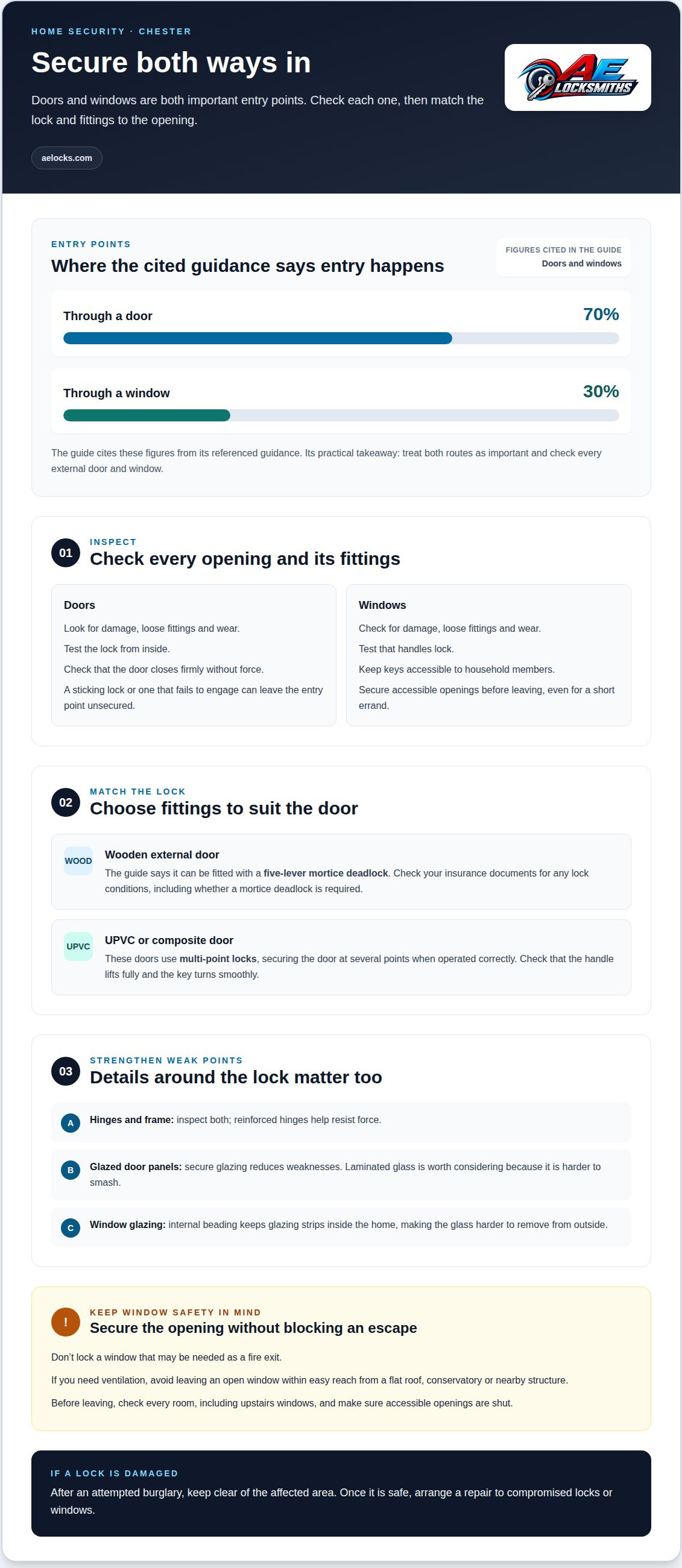
Inspect every external door and window for damage, loose fittings and wear. Test the locking mechanism from inside, then check that the door closes firmly without force. A lock that sticks or fails to engage can leave an entry point unsecured, even when you turn the key.
Choose the lock to suit the door. A wooden external door can be fitted with a five-lever mortice deadlock. UPVC and composite doors use multi-point locks, which secure the door at several points when operated correctly. Check that the handle lifts fully and the key turns smoothly. AE Locksmiths’ UPVC Windows & Doors service can help address faults with these fittings.
Check the hinges, frame and any glazed panels. Reinforced hinges help resist force, while secure glazing reduces weaknesses around the door. Laminated glass is worth considering for door panels because it is harder to smash. On windows, internal beading keeps the glazing strips inside the home, making it harder to remove the glass from outside.
Check that window handles lock and keep keys accessible to household members. Don’t lock a window that may be needed as a fire exit. If you need ventilation, avoid leaving an open window within easy reach from a flat roof, conservatory or nearby structure. Secure accessible openings before leaving, even for a short errand.
Burglars may enter through either route: the guidance cited for this article gives figures of 70% through a door and 30% through a window. Treat both as important. Check insurance documents for any lock conditions, including whether a mortice deadlock is required. If a lock is damaged after an attempted burglary, keep clear of the affected area and arrange a repair once it’s safe.
4. Securing sheds, garages, tools and bicycles
A garden shed can contain tools that make another break-in easier. Put spades, bricks and ladders away instead of leaving them beside a wall or fence. A ladder can help someone climb over a gate or reach an upper window, so lock it inside the shed. If there’s no shed, chain it to a secure point on the back wall.
Secure the shed as well as its contents. Fit a suitable lock and keep the key somewhere safe, not on a hook beside the door. Store smaller tools in a locked box or locker inside. Put garden equipment away after use, including items that could be used to force a door or window.
Keep bicycles inside a locked shed or garage, then attach each bike to the ground or a lockable stand. A locked building adds a barrier, while a separate bike lock makes removal harder. Keep the bicycle out of sight from the street where possible, and don’t leave its key or lock combination visible nearby.
For an up-and-over garage door, a padbolt can be fixed into the concrete driveway to help secure it. A garden gate can also be secured with a padbolt and padlock. Keep wheelie bins away from doors, windows and fences, and put them away after collection. Bins beside a fence can provide a climbing aid.
Keep jewellery and other valuables in the house, rather than in a shed or garage. If outdoor lighting has switches accessible from outside, move or protect them so they can’t be easily tampered with. Check the shed, garage, gate and storage locks before leaving home; replace a lock that no longer secures properly. For help with a faulty home lock, get residential locksmith assistance.
AE Locksmiths: Home Alarms
AE Locksmiths installs Home Alarms for households adding an alarm to their wider security measures. An alarm can complement secure doors, windows and careful routines, but it doesn’t replace sound locks or sensible habits. If you’re reviewing several entry points, consider how an alarm fits alongside your home’s physical security.
Contact AE Locksmiths to discuss a home alarm or get help with a lock or UPVC door or window. The right solution depends on the issue: an alarm helps detect activity, while a locksmith can address physical access and locking concerns. AE Locksmiths offers a free quote, with no callout fee.
Choose the right next step for your home
If you’re deciding how to make your home more secure in Chester, choose one unresolved concern as your next step. A sticking lock, a vulnerable UPVC frame or uncertainty about alarm coverage each calls for a different response. Note the issue and the access point involved, so advice can focus on the right part of your home rather than a general upgrade.
AE Locksmiths provides Residential Locksmith services for home lock concerns and UPVC Windows & Doors services for relevant fittings. Commercial Locksmith services are for business premises. Start with the issue affecting your property and seek advice that matches it. A change in how you use an entrance, such as making a side door your main access, can also be a good reason to review your security priorities.
For a considered next step, contact AE Locksmiths for home security advice. Explain what you want to address, and you can discuss a practical way forward for your property. Taking one clear step helps you build a security plan that fits your home and household.
Frequently Asked Questions
How do I secure my home?
Build security into your routine and deal promptly with weaknesses. If a key goes missing, consider whether anyone could connect it to your address, and arrange a lock change if needed. Keep track of who has keys and collect them when access is no longer needed. If you rent, speak to your landlord before changing locks or adding security measures.
Why should you check your home before going away?
A check before departure can catch oversights, such as an unsecured side entrance or a window left open for ventilation. It also gives you time to deal with problems before the property is empty. Walk through the home in daylight, and ask someone you trust to contact you if they notice damage or an unexpected issue while you’re away.
What are the best ways to secure a home in Chester?
To decide how to make your home more secure in Chester, consider the property’s layout and access points. A home with a rear alley, shared entrance or detached garage may need attention beyond the front door. Trace the route from the pavement to the building, including gates and side passages. Prioritise a vulnerable or frequently used entrance, then review other weak spots.
How can I improve door and window security in a UK home?
Check that locks work smoothly and that frames, hinges and handles remain firmly attached. If a UPVC door handle feels loose or its mechanism catches, don’t force it, as this may worsen the fault. A residential locksmith can assess lock or door concerns. For windows, consider security alongside safe escape, especially where a window may be used as an exit.
How can I make my home look occupied when I’m away?
Create small signs of normal activity instead of relying on one visible lamp. A trusted neighbour can collect deliveries and adjust curtains to match your usual routine. Avoid public posts or voicemail messages announcing your absence or return date. Share travel details only with people who need them, and talk about your trip after you’re back.
What home security advice does Cheshire Police give residents in Chester?
For advice on how to make your home more secure in Chester, focus on limiting easy opportunities for entry and keeping valuables out of view. If you notice damage or signs of an attempted break-in, keep clear of the affected area and report the incident to the police. For recurring concerns on your street, speak with neighbours about looking out for unusual activity together.


