

A secure site needs more than a locked door. Business security systems in Widnes can combine fob and card entry, CCTV and suitable door security to help manage who enters and monitor key areas.
It’s understandable to want a clear plan for what happens when an alarm is triggered, especially while your premises are empty. Access control, cameras and response arrangements each have a different role, so the details matter.
This article explains how to plan an integrated system for your premises, what local coverage means in practice, and how police response and keyholder notifications fit into an alarm plan. You’ll also learn how to choose the right combination of security measures for your business.
Key Takeaways
- Learn how fob and card entry can help organise access to different parts of your premises.
- See how CCTV and other site security measures can work together to support a more joined-up approach.
- Understand what local coverage can mean when planning security for a Widnes business and nearby sites.
- Find out how alarm response arrangements, police involvement and keyholder notification fit into a practical plan.
Access control
For a Widnes workplace, access control determines who can enter each door and when. Map staff entrances, visitor routes and restricted rooms before choosing equipment.
Door access systems
Door access systems use credentials such as cards, fobs or codes to operate selected entry points. For example, a warehouse could give approved staff access to the loading entrance while keeping its stockroom restricted. Before installation, identify which doors need controlled entry, who needs access and whether visitors need a separate route. These decisions shape the system layout.
Staff access monitoring and smart keys
Access monitoring can record events such as a staff member presenting a fob at a door. A manager can review those records to investigate an entry issue, depending on the system’s functions. Programmed fobs can make access permissions easier to manage than issuing physical keys for every door. Plan how to update permissions when roles change or a fob is lost.
Start with a door-by-door plan. Mark the main entrance, staff-only areas, delivery access and rooms holding sensitive equipment. Then assign access by role: a receptionist may need the front entrance, while a stockroom keyholder needs access to that room. Clear permissions limit unnecessary access without disrupting normal work.
- Entry points: identify doors that need controlled access.
- Permissions: match each credential to approved staff and required areas.
- Records: decide who reviews access events and how often.
Installation should account for the door hardware and how staff use each entrance. Consider how controlled doors relate to a burglar alarm: an access event and an alarm signal serve different purposes. A joined-up plan helps staff understand which action opens a door and which activates the alarm.
Integrated commercial and industrial security
Plan cameras, alarms and controlled entry around your premises’ risks and routines. For a Widnes warehouse, that might mean covering delivery access, storage areas and staff entrances.
Commercial CCTV systems
Commercial CCTV systems use cameras to capture activity in selected areas, with recordings available for review. First identify the areas that matter, such as a loading bay, reception or vehicle entrance. Camera position, lighting and obstructions affect what footage shows. A site plan can reveal blind spots before installation and keep camera coverage focused on relevant areas.
Comparing CCTV, alarms and access control
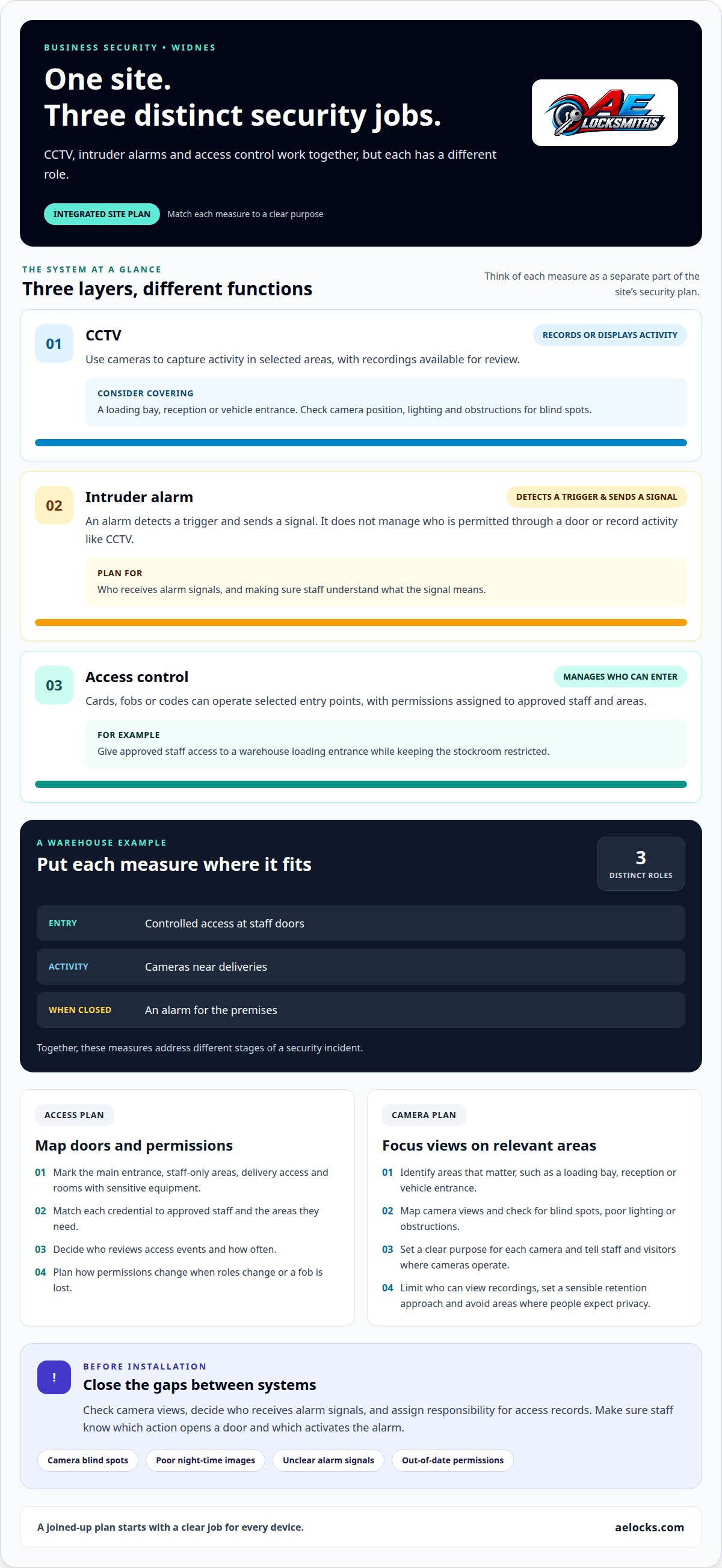
Each system has a different job. CCTV records or displays activity, an intruder alarm detects a trigger and sends a signal, while access control manages who can enter. For example, a warehouse could use controlled entry at staff doors, cameras near deliveries and an alarm when the premises are closed. Together, these measures address different stages of a security incident.
Workplace CCTV laws and ICO rules
In the UK, workplace CCTV involves data protection responsibilities, and the Information Commissioner’s Office (ICO) provides guidance on surveillance. Set a clear purpose for each camera, such as protecting stock or reviewing access incidents. Tell staff and visitors where cameras operate, limit who can view recordings, and set a sensible retention approach. Avoid recording areas where people expect privacy.
Common risks include camera blind spots, poor night-time images, alarm signals staff don’t understand, and access permissions that remain active after roles change. Before installation, map camera views, identify who receives alarm signals and assign responsibility for access records. A blocked view of a side entrance, for example, can leave a gap in coverage even when cameras operate elsewhere.
Security system companies serving Widnes and nearby areas
For a Widnes business, local coverage matters when an installation spans several premises or includes a site outside town. Assess the proposed system, coverage area, installation plan and handover arrangements before proceeding.
Widnes and North-West service coverage
List each premises that needs attention, including any branch or warehouse elsewhere in the North-West. A clear site list helps define whether the work covers one alarm system or several locations with different entry points. Consider each site’s needs: a domestic-style alarm may not suit a busy commercial building with separate staff and delivery access. Include an on-site contact, such as the person at reception, in installation planning and handover. This keeps access arrangements practical across sites.
Choosing a security system installer
Before appointing an installer in Widnes, make sure the proposed work matches your premises and identified risks. Review the written scope for equipment locations, detection coverage, access points and how staff will be shown how to use the system. A warehouse may need a different layout from an office with a public reception. Ensure responsibilities for operation and routine checks are clearly described, rather than assuming staff will know how to use unfamiliar devices.
Use a practical review before agreeing to the work:
- Site scope: confirm the plan names every building and area included.
- System purpose: check that each device has a clear role, such as detecting entry or controlling a door.
- Staff handover: identify who will learn to operate the alarm system and manage access.
- Future changes: consider how the layout can accommodate new rooms, staff routes or storage areas.
For businesses operating across the North-West, consistent system records can help staff understand which devices protect each site. Keep the site plan and operating instructions available to the relevant team. This gives a new manager a straightforward starting point if responsibilities change and helps avoid confusion between a business alarm and domestic equipment elsewhere on the property.
Police response and keyholder notification
An intruder alarm can alert people to a possible incident, but the signal alone doesn’t explain what happened. A response plan should identify who receives notifications, who can attend the Widnes premises and what information they need.
Police attendance should not be treated as automatic whenever an alarm activates. The response depends on the circumstances and applicable arrangements. Set out how a signal will be assessed and who will be contacted, so staff know what to expect if a sensor detects activity.
A keyholder plan names the people responsible for responding to an alarm notification. Keep contact details current and make sure each person knows the site address, access arrangements and escalation steps. If the first keyholder is travelling, for example, the plan should show who takes over and how they receive the alert.
Maintenance, monitoring and response arrangements depend on the system and service selected. A plan can cover routine checks of alarm devices, who reviews alerts and how keyholders are notified. Tailor these details to the premises, whether it’s a home or business, and the people responsible for acting on an alert.
Before putting the plan into use, define these practical steps:
- Notification: specify who receives an alarm signal and how they’re contacted.
- Attendance: assign a named keyholder and a backup for the site.
- Access: record how authorised responders enter, without leaving access details exposed.
- Review: update contacts when staff roles or responsibilities change.
Clear instructions help avoid confusion when a sensor activates outside normal working hours. They also help distinguish an alarm alert from confirmed evidence of an intruder. If you need help with a security concern at your premises, contact AE Locksmiths for assistance.
AE Locksmiths
AE Locksmiths can help with locks, doors and safe access. For business premises, its Commercial Locksmith service addresses door and lock concerns, while UPVC Windows & Doors support can help with those entry points.
Security planning also means protecting access to stored valuables. Safe Access can help when a business needs assistance with a safe, and Residential Locksmith services support home security needs. These services complement wider decisions, such as controlling entry and planning who responds to an alarm.
If you’d like help with locks, doors or safe access, contact AE Locksmiths to discuss your needs.
Make your next security decision practical
Before changing your business security systems in Widnes, write down the areas that concern you most and the problems you need to solve. A clear starting point turns a broad security concern into a practical discussion about your premises, doors and access needs.
AE Locksmiths can help with commercial lock concerns, residential locksmith needs and UPVC Windows & Doors. These services can support a review of physical entry points as part of a wider security plan.
You don’t need to settle every detail before seeking help. Start with the issue affecting your business now, such as a lock that needs attention or a door that isn’t working as it should. Contact AE Locksmiths about your business security to discuss a practical next step for your premises.
Frequently Asked Questions
What types of business security systems are available in Widnes?
Businesses in Widnes can consider CCTV cameras, commercial alarms, fob and card entry, commercial locksmithing, UPVC door and window work, and safe access. Each addresses a different need. A shop with a rear delivery entrance, for example, may prioritise entry control, while an office may need cameras covering reception. Choose components to suit your premises, working routines and security concerns.
Which business security companies serve Widnes and nearby areas?
AE Locksmiths serves Widnes and nearby areas, including Liverpool, Warrington, Wirral, St Helens, Chester and Northwich. Its business services include commercial locksmithing, CCTV cameras, commercial alarms, and fob and card entry. If your business operates across several locations, describe each site and its main security concern when discussing the work. That helps focus the conversation on the premises and equipment involved.
How much do commercial CCTV systems cost in Widnes?
The cost depends on the site and the CCTV system required, so there isn’t one price for every business. Factors include the areas needing camera coverage, the number and positioning of cameras, and the recording setup. AE Locksmiths provides a free quote by phone where possible, and any on-site quote is free. Share the areas of concern to help define the work.
Which access control systems are suitable for businesses in Widnes?
Fob and card entry can suit businesses that want staff to use credentials instead of relying only on physical keys. The right setup depends on the doors involved, how staff enter and whether different areas need separate permissions. For example, a business might control its staff entrance separately from a customer-facing door. Consider how access will be managed when roles change or credentials go missing.
How can a Widnes business assess its security risks and choose a system?
To choose business security systems in Widnes, walk through your premises at opening and closing, noting exposed entrances, valuable stock and areas with limited visibility. Rank the concerns that could disrupt operations, such as an unsecured rear door or a room containing sensitive equipment. Match each concern to a practical measure, and consider how staff will use and manage it day to day.


