

A break-in doesn’t automatically determine who pays. What to do after a break-in in Liverpool starts with getting somewhere safe, reporting the incident and recording damage before arranging repairs. Responsibility for the cost depends on what was damaged, who owns or occupies the property, and the relevant insurance or tenancy arrangements.
It’s understandable to worry about an unexpected bill while dealing with the disruption. At Albert Dock, next steps may differ for a private home, a business or a shared area. This guide covers what to do first, what to consider when arranging security repairs and how to establish who may be responsible for the cost.
You’ll also learn when a contribution towards a Liverpool short-break service may be requested and who explains it. The aim is to separate immediate safety steps from payment questions, so you can deal with each in turn.
Key Takeaways
- Prioritise your safety, then report the burglary through the appropriate police route.
- Limit contact with damaged areas and belongings so you don’t disturb potential evidence.
- Contact your home insurer and keep a clear record of damage, losses and repair steps.
- Gather useful claim documents, including proof of ownership and details of the incident.
- Find out what victim support is available in Liverpool, and when a locksmith can help secure your home.
3. How do I report a burglary to Merseyside Police, and when should I call 999 or 101?
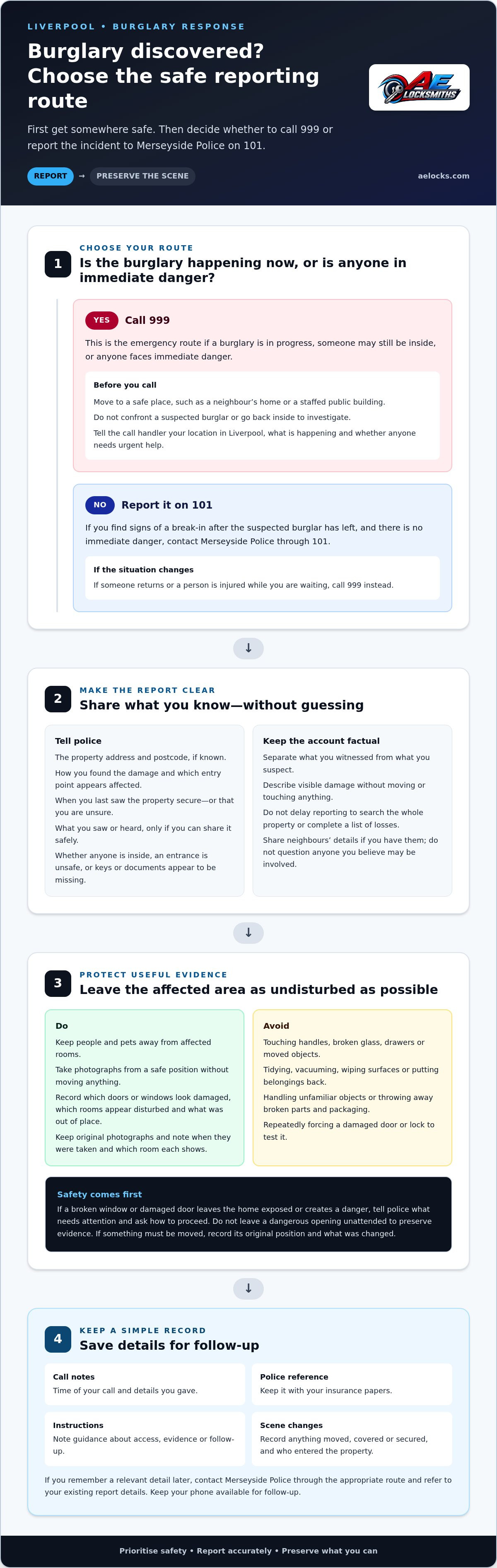
Call 999 if a burglary is happening now, someone may still be inside, or anyone faces immediate danger. Move to a safe place before calling, such as a neighbour’s home or a staffed public building. Don’t confront a suspected burglar or go back inside to investigate. Tell the call handler your location in Liverpool, what is happening and whether anyone needs urgent help.
If you discover signs of a break-in after the suspected burglar has left, contact Merseyside Police through 101 to report it. Use this non-emergency route when there’s no immediate danger and the incident isn’t unfolding. If the situation changes while you’re waiting, such as someone returning or a person being injured, call 999 instead.
Have the property address ready, including the postcode if you know it. Explain how you found the damage, which entry point appears affected and when you last saw the property secure. If you’re unsure when the burglary happened, say so rather than guessing. Give a clear account of anything you saw or heard, including a vehicle or person’s description, only if you can do so safely.
Describe what you can see without moving items or touching damaged doors and windows. Mention whether anyone is inside, whether a room or entrance is unsafe, and whether anything stolen could create an immediate risk. For example, tell the call handler if keys or documents appear to be missing. Don’t delay reporting while searching the whole property or making a complete list of losses.
When speaking to Merseyside Police, keep your account factual and distinguish what you witnessed from what you suspect. You can explain that a window is broken, then clarify if you don’t know how it happened. If neighbours may have seen or heard something, share their details if you have them, but don’t question anyone you believe may be involved.
- Write down the time you called and the details you gave.
- Ask how to provide photographs or other information safely.
- Keep any police reference details with your insurance papers.
- Note any instructions about access, evidence or follow-up contact.
These notes help keep your police report, insurer communication and repair arrangements consistent. If you remember a relevant detail later, contact Merseyside Police through the appropriate route and refer to your existing report details. Keep your phone available for follow-up, and avoid sharing sensitive details publicly while the incident is being dealt with.
4. How can I avoid disturbing evidence after a burglary?
Once you’re somewhere safe, keep people and pets away from affected rooms. Footwear, fingerprints or marks around a forced door could be useful to investigators. Avoid touching handles, broken glass, drawers and objects that appear moved. If you must cross an area to leave, use a route you already know is clear rather than stepping around to inspect the property.
Don’t tidy up, vacuum, wipe surfaces or put belongings back in place. A glass shard beside a window, for example, could indicate where entry occurred. Even moving a chair or opening a cupboard can alter the scene. If children or pets are at home, take them somewhere safe and ask them not to enter the affected rooms.
Photographs can help you remember what you saw. Take them from a safe position without moving anything, capturing the damaged entrance, the room as a whole and visible damage to individual belongings. Avoid close-ups that require touching or leaning over objects. Keep the original images on your phone, and note when you took them and which room each image shows.
Make a written record while your observations are fresh. Note which doors or windows look damaged, which rooms appear disturbed and anything you noticed out of place. Separate what you saw yourself from what another person told you. For example, write “the back window was cracked when I arrived” rather than guessing when or how it broke.
- Keep damaged keys, tools or other unfamiliar objects where they are.
- Don’t handle items that appear to have been left behind.
- Ask visitors to avoid the affected rooms and explain why.
- Record the names of anyone who has already entered the property.
Balance preserving the scene with making the property safe. If a broken window leaves the home exposed to weather or entry, tell the police what needs attention and ask how to proceed before arranging work. Don’t leave a dangerous opening unattended while trying to protect evidence. If safe, photograph the damage first, then note anything that had to be moved, covered or secured.
If an item must be moved to prevent injury, avoid unnecessary handling and record its original position before shifting it. Don’t throw away broken parts or packaging from damaged property. Keep them together in a safe place, separate from rubbish, and note who moved them. When investigators attend, explain any changes and show them your photographs and notes.
For example, if a damaged door won’t close, don’t repeatedly force it to test the lock. Keep people away from the entrance and describe the problem clearly when seeking instructions. A careful record of the scene, including necessary safety changes, helps explain what happened without disturbing more than necessary.
5. How do I contact my home insurer and make a burglary claim in the UK?
Start with your policy documents and find your home insurer’s claims contact details. Use the insurer’s app, online claims form or phone number shown in your paperwork. If you rent, check whether you have contents cover: the landlord’s buildings policy generally relates to the property, while your belongings need your own cover.
Have your policy number and police report reference ready. If you’re still waiting for the reference, tell the insurer you’ve reported the burglary and provide the details later. Give the incident address, when you discovered the break-in and a clear account of what appears damaged or missing. Keep your description factual, distinguishing confirmed losses from items you’re still checking.
Ask the insurer how to submit the claim and what evidence it needs. A claim may require separate details for stolen belongings, building damage and urgent work to secure an entrance. For example, explain that a rear door is damaged, then ask whether the insurer needs photographs, an estimate or approval before repairs begin.
Don’t assume that every repair or replacement will be covered in full. Check the policy wording for relevant cover, exclusions, limits and excess. The excess is the amount you may need to contribute towards an accepted claim. Ask how it applies to your claim, especially if you’re reporting both stolen items and damage.
Keep a record from your first contact with the insurer. Note the date, the claims handler’s name, any reference number and the instructions you receive. Save emails, letters, photographs and receipts together. If the insurer asks for more information, note what you sent and when. This makes it easier to answer follow-up questions consistently.
- Report missing items with a brief description, approximate age and proof of ownership where available.
- Describe damage separately from stolen property, such as a broken window or forced lock.
- Keep receipts for necessary temporary work and record what it addressed.
- Ask before arranging permanent repairs or replacing valuable belongings.
If the home needs temporary protection, tell the insurer what is exposed and what action seems necessary. Ask whether it wants to approve the work or see evidence first. If an immediate safety issue means you must act, record the reason, take photographs if safe, and keep invoices and receipts. Don’t discard damaged parts or belongings until the insurer explains what it needs.
For instance, if a window has been forced and rain can enter, photograph it from a safe position and contact the claims team. Explain the risk, ask how to protect the opening and record the response. This connects the repair decision to your claim file and helps the insurer assess the damage clearly.
4. What evidence and documents are needed for a burglary insurance claim
Keep digital copies and paper records together in one claim folder. Start with your policy schedule, policy number and police report reference. Add the date you reported the incident and any claim reference from your insurer. These details help connect later evidence to the right property and claim.
For stolen belongings, make an itemised list rather than recording only a total. Include each item’s make, model, colour, approximate age and purchase details where known. For example, describe a missing laptop by its brand and model, not simply as “computer”. Separate items you know are missing from belongings you’re still checking.
Proof of ownership can take different forms. Look for receipts, order confirmations, bank or card statements, warranty documents, photographs showing the item in your home, or packaging with identifying details. A receipt may show when you bought an item, while a photograph can help identify its appearance. Keep original files and note which listed item each record supports.
Record damage separately from stolen possessions. Save photographs of damaged doors, windows, locks and affected rooms, alongside any written repair estimate or invoice. If urgent work was needed to make the property safer, keep the receipt and a short note explaining what was done. Don’t describe an estimate as a final invoice or assume one document proves every aspect of the loss.
A useful claim folder may include:
- Your policy schedule and insurer correspondence.
- The police report reference and your incident notes.
- An itemised list of missing belongings and available ownership records.
- Photographs, repair estimates, invoices and receipts related to damage.
- Any tenancy or ownership paperwork relevant to the property or contents.
If you rent, keep your tenancy agreement separate from evidence about your belongings. It can help explain your connection to the address, while contents records relate to items you own. For a damaged fixture, note whether it belongs to you or forms part of the property. This distinction helps present the claim clearly without treating a landlord’s item as your personal possession.
Use consistent descriptions across your list, photographs and insurer forms. If a watch is recorded as silver in one place and gold in another, explain the difference rather than leaving a mismatch unexplained. Keep a copy of each form before sending it, and record when documents were shared. If the insurer requests more information, add the request and your response to the same folder.
Some records may be unavailable after a burglary. Explain what evidence you can provide and what it shows, such as a bank statement confirming a purchase. Keep the claim focused on the loss, ownership and damage you can describe, and send additional evidence through the insurer’s stated process.
5. What support is available for burglary victims in Liverpool, including Victim Support
A burglary can leave you unsettled while you deal with damaged property and missing belongings. In Liverpool, start by telling someone you trust what happened and what help would make today easier. That might mean company while you make calls, help organising paperwork, or somewhere else to stay while an entrance is unsafe.
Victim Support is an organisation you can contact to discuss support after a burglary. Explain what happened, whether you live alone and what is causing the most difficulty now. For example, you might need help understanding the next steps, talking through the impact or finding out what support could suit your circumstances. Keep the police incident reference nearby if you have it.
You can also speak with people already involved in your situation. If you rent, tell your landlord or managing agent about damage affecting the property, such as a broken shared entrance. If you live in a managed block, contact the building manager about communal doors, access arrangements or damage in shared areas. Note who you spoke to and what you reported.
Practical help can come from your household or support network. Ask a trusted friend or relative to sit with you while you list missing items, contact your insurer or arrange temporary accommodation. If daily tasks feel difficult, tell someone clearly what would help, such as collecting essential belongings or accompanying you to an appointment.
- Write down the immediate problem, such as an unsafe entrance or missing medication.
- Keep police and insurer reference details together for support conversations.
- Tell your landlord or building manager about damage to shared property.
- Choose one trusted person to help organise calls and records.
If the burglary has affected your sleep, concentration or sense of safety at home, describe the effect plainly when speaking with Victim Support or someone you trust. For instance, say if you’re avoiding a room, feel unable to stay alone or need help planning a return home. Clear examples help others understand what practical or emotional support you’re seeking.
For children or other household members, use simple, calm explanations suited to their age and needs. Let them know which areas are safe to use and who they can speak with if they feel worried. A familiar routine, such as sharing a meal with family, may provide structure while you deal with calls and paperwork.
Support needs can change as you move from reporting the burglary to arranging repairs and handling insurance documents. Keep a short note of outstanding tasks and who is helping with each one. If you contact Victim Support, explain what you’ve already done and what remains difficult, so the conversation can focus on your current needs.
AE Locksmiths: Residential Locksmith
AE Locksmiths can help when a burglary leaves your home’s lock or entrance needing attention. Its Residential Locksmith service is relevant if a door won’t secure properly or you’re concerned about who may have a key. For damage involving a UPVC door or window, AE Locksmiths also works on UPVC Windows & Doors.
Describe the issue clearly when you get in touch. For example, explain whether the lock is damaged, the door won’t close or a safe needs access. If you’re making an insurance claim, keep records of the damage and any work arranged, and follow your insurer’s instructions about repairs.
For help with a residential lock, damaged UPVC door or window, or safe access, contact AE Locksmiths.
Take the next step towards feeling secure at home
After a burglary, restoring a sense of control can take more than completing forms. Choose one practical next step to make the property feel safer, then tackle the remaining decisions in a manageable order. Knowing what to do after a break-in in Liverpool also means recognising when a damaged lock, door or window needs attention before normal routines can resume.
AE Locksmiths provides Residential Locksmith and Commercial Locksmith services, as well as work on UPVC Windows & Doors. These services can help when a break-in has left an entrance damaged or difficult to secure. Keep repair details with your claim records, and follow your insurer’s instructions about work connected to the claim.
If securing a lock, door or window is your next step, contact AE Locksmiths for support. Take things one decision at a time and focus first on making your home feel safe and usable again.
Frequently Asked Questions
Will I have to pay?
There isn’t one automatic answer: payment depends on the damaged property, ownership, tenancy and insurance arrangements. A home insurer assesses claims against the policy, including its cover and excess. Liverpool’s short-break services are separate from burglary repairs: a carer or the person receiving care might be asked to contribute, and a social worker explains any requested contribution. That support does not determine who pays to repair your home.
What should I do immediately after a break-in in Liverpool?
Get to a safe place and call 999 if someone may still be inside or there’s immediate danger. If the suspected burglar has left and nobody is at risk, report the burglary to Merseyside Police through 101. For what to do after a break-in in Liverpool, keep your address and postcode ready, and ask a trusted household member to help make calls if you’re shaken. Don’t re-enter to search for belongings.
How can I secure my home after a break-in and prevent another burglary?
Focus first on the damaged entry point and any keys that may be missing. Keep people away from unsafe doors or broken glass, and record any temporary protection needed. If keys were taken, tell your insurer and consider whether the affected lock needs changing. Once urgent repairs are addressed, review vulnerable doors and windows, lighting and access routines. AE Locksmiths can assess damaged locks and UPVC Windows & Doors. Contact AE Locksmiths for locksmith support in Liverpool, Warrington, Wirral, St Helens, Widnes, Chester and Northwich.


