

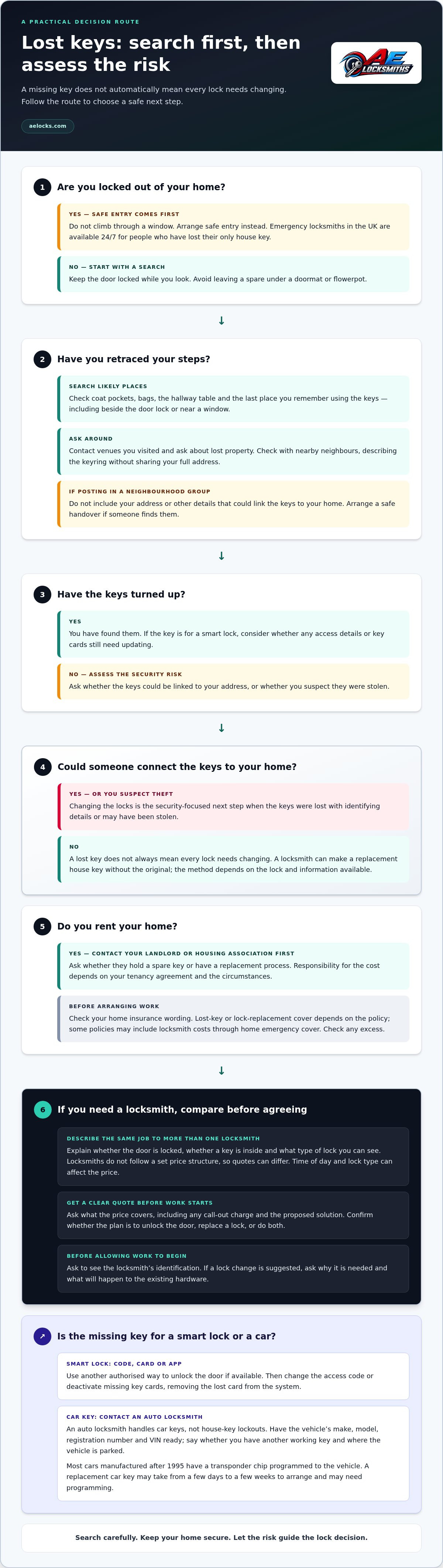
A lost key doesn’t always mean every lock needs changing. If you’re asking what to do after losing your keys in the UK, retrace your steps and check the places you usually leave them. Change the locks if the keys were with something showing your address or you suspect they were stolen. If you’re locked out, don’t climb through a window; arrange safe entry instead.
It’s understandable to feel unsettled, especially if you can’t get into your home or aren’t sure who might find the keys. This guide explains how to search for them, what to do if you rent, how to compare emergency locksmith quotes and when changing the locks makes sense.
You’ll also learn how to regain access without taking unnecessary risks, and what details can affect a locksmith’s quote. Start with the immediate checks, then weigh the security risk before deciding your next step.
Key Takeaways
- Before booking an emergency locksmith, compare quotes and agree the work and price in advance; the lock type and time of day can affect the cost.
- Retrace your steps and contact places you visited. If you rent, tell your landlord or housing association that the keys are missing.
- A replacement house key can be made without the original. For security, weigh whether the lost keys could be linked to your address.
- Regain access safely: avoid climbing through a window, and consider changing the locks if the keys may have been stolen or were lost with identifying details.
Calling an emergency locksmith and comparing quotes
- Call for help if you’re locked out. Emergency locksmiths in the UK are available 24/7 for people who have lost their only house keys. If you’ve lost your keys, what should you do in the UK? Explain whether the door is locked, whether a key is inside, and what type of lock you can see. These details help describe the job clearly.
- Compare several quotes before agreeing to work. Contact more than one locksmith and describe the same problem to each. UK locksmiths don’t follow a set price structure, so quotes can differ. The time of day and type of lock can affect the price. Ask for a clear quote before work starts, including any call-out charge and the proposed solution.
- Ask for identification and agree the job. Before allowing work to begin, ask the locksmith to show identification and confirm what the quoted price covers. Check whether the plan is to unlock the door, replace a lock or both. If a lock change is suggested, ask why it’s needed and what will happen to the existing hardware.
- Update smart-lock access straight away. If your home uses a code, card or smartphone app, use another authorised method to unlock the door if available. Then change the access code or deactivate lost key cards. For example, remove a missing card from the system so it can no longer open the door.
- Prepare vehicle details for an auto locksmith. For a lost car key, have the vehicle’s make, model, registration number and VIN ready. A replacement key may need programming so its transponder works with the vehicle. If you’ve lost your keys in the UK, remember that an auto locksmith handles car keys, not house-key lockouts.
- Explain the vehicle and urgency clearly. Say that the missing key is for a car, whether you have another working key and where the vehicle is parked. This helps the auto locksmith understand the job. Don’t assume a house locksmith handles vehicles; describe the car-key problem when you call.
Contacting neighbours, places visited, and landlords
Retrace your route before deciding the house keys are gone for good. If they don’t turn up, contact nearby neighbours, places you visited and your landlord.
-
Retrace your steps and check likely places
Walk back through the places you visited and check where you usually leave your keys, such as a coat pocket, bag or hallway table. Look around the last place you remember using them, including beside the door lock or near a window. Contact venues you visited and ask about lost property. If you post in a neighbourhood group, don’t include your address; a keyring linked to your home could create a security risk.
-
Ask neighbours about your lost keys
Contact neighbours who may have seen your keys or picked them up near your home. Give a clear description of the keyring, but don’t share your full address in a public post. If someone finds keys with identifying details, arrange a safe handover. Keep the door locked while you search, and don’t leave a spare under a doormat or flowerpot, where a burglar might look.
- Contact places you visited. Call or message each venue and describe the keys and keyring. Include when you were there and where you may have left them, such as a café table or reception desk. Ask whether the venue has a lost property service and how to collect the keys. Avoid sharing identifying details that could link them to your home.
- Check your home insurance. Cover for lost keys or lock replacement depends on your policy wording. Some policies may include locksmith costs through home emergency cover, so read the relevant section and check any excess before arranging work.
- Tell your landlord or housing association if you rent. Ask whether they hold a spare key or have a process for replacing one. Responsibility for the cost depends on your tenancy agreement and the circumstances. Contact them before arranging a replacement so you follow the agreed procedure.
If a door or window is damaged and no longer secures your home, UPVC door and window help may be relevant.
Making a key without the original
- Ask about a replacement house key. A locksmith can make a key even when the original is lost. Explain whether the door is locked and describe the lock, if you can see it. The replacement method depends on the lock and the information available. If you have no way inside, arrange access first, then discuss making replacement keys.
- Separate a broken key from a missing one. If part of a key is still in the lock, don’t force another key into it. Tell the locksmith that the key is broken and whether any piece remains visible. A missing key presents a different issue: the locksmith may need to work from the lock rather than copy an original.
- Give an auto locksmith the vehicle details. For a replacement car key, prepare the make, model, registration number and vehicle identification number, or VIN. A UK auto locksmith may also ask for proof of identity when making a key without the original. Keep the vehicle accessible so the locksmith can work with its lock and security system.
- Allow time for a coded car key. Most cars manufactured after 1995 have transponder chips programmed to a specific vehicle. A replacement car key may take from a few days to a few weeks to arrange. Ask what information is needed and whether the key must be programmed to start the vehicle.
- Explain what the missing car key included. A car key may combine three parts: a mechanical key, a coded electronic transponder chip and a remote control. If the transponder chip is broken or missing, the engine won’t start. If the transponder chip is damaged or missing, ask an auto locksmith whether the replacement key needs programming. Describe any remaining key or damaged parts clearly.
Safe ways to regain access to a home
- Stay outside and avoid risky entry. Don’t climb through a window or force the door; either can cause injury or damage. If you’re locked out, use a safe route: contact someone with a spare key or arrange professional entry. A locksmith may usually gain entry to a UK home within 15 to 30 minutes.
- Decide whether the lost keys create a security risk. Changing the locks is advised if the keys were stolen or lost with items showing your home address. For example, a key attached to an address-labelled bag could identify your property. If the keys were misplaced nearby without identifying details, consider the circumstances before deciding whether a lock change is needed.
- Ask about rekeying as well as replacement. Rekeying changes the lock’s internal mechanism so the old keys no longer work and a new set can be used. This may suit a lock that remains in good condition. Ask the locksmith to explain whether rekeying or replacing the lock best addresses the risk and the condition of your door.
- Use a nearby trusted person for a spare. Leave a spare with someone you trust rather than hiding it under a doormat or flowerpot. Those hiding places are familiar to burglars. If you use a key safe, keep its code private and return the key after use.
- Check the security standard your insurer requires. A wall-mounted key safe should conform to British Standard BS 3621 if your insurer requires it. Read your policy or home emergency plan for locksmith cover before paying yourself. According to the Master Locksmiths Association, it has over 340 approved locksmiths in the UK.
- Arrange a spare for next time. Once you’re back inside, consider getting a spare key or two and storing one with someone you trust. If a key safe suits your home, choose a secure location and remember the code. This gives you a planned way in without risking a climb through a window.
If you’re locked out and need help regaining access, arrange safe home access.
AE Locksmiths: Residential Locksmith
AE Locksmiths can help if lost house keys leave you locked out or unable to secure your home. Its Residential Locksmith service covers emergency lockouts for residential customers across Merseyside and surrounding areas, including Liverpool, Warrington, Wirral, St Helens, Widnes, Chester and Northwich. If the keys may have been stolen, explain the circumstances so the lock and access issue can be considered together.
AE Locksmiths also works on UPVC Windows & Doors, which may be relevant if a door or window is damaged and no longer closes securely. For a safe you can’t open, its Safe Access service addresses that separate access problem. Commercial customers can also use its Commercial Locksmith service for business premises.
For a home lockout or a security concern after losing your keys, contact AE Locksmiths to discuss the help you need.
Take the next step towards secure access
Once you’re back inside, use the experience to make a clear plan for future access. Decide who should hold a spare, how you’ll keep track of it and what you’ll do if keys go missing again. If the keys could identify your address, prioritise restoring confidence in your home’s security rather than simply replacing the missing key.
If you’re asking what to do in the UK after losing your keys, focus first on the immediate issue: getting in, securing the property or addressing a damaged door or window. AE Locksmiths provides residential and commercial locksmith services, alongside UPVC Windows & Doors work. Choose the help that fits the problem, without taking risks to get inside.
Contact AE Locksmiths for help with your access or security needs. A practical next step can help you move forward calmly and safely.
Frequently Asked Questions
Should I change locks after losing house keys?
Change the locks if the keys were stolen or lost with anything showing your home address. If they were misplaced without identifying details, consider whether anyone could connect them to your property. A locksmith can rekey a suitable lock so the old keys no longer work, or replace it. If you rent, tell your landlord or housing association before arranging changes.
Can a locksmith make a key without the original?
Yes. A locksmith can make a replacement house key without the original by working from the lock. Explain the lock type and whether the door is open or locked, as these details affect the work involved. Car keys are different: electronic transponders may need programming for the specific vehicle, so contact an auto locksmith for that job.
What should I do immediately after losing my keys in the UK?
First, check your pockets, bags and the last place you used the keys. If you’re outside your home, avoid forcing a door or climbing through a window. Use a spare held by someone you trust, if possible. If you rent, notify your landlord or housing association before arranging replacement keys or changing the lock.
How can I retrace my steps and find lost keys?
Start from the last moment you remember having the keys, then follow your route in order. Check places where you stopped, sat down or took off a coat, such as a car seat, café table or workplace reception. Search bags and pockets separately rather than emptying everything together. Call each venue and describe the keyring so staff can check lost property.
Where should I report lost keys in the UK, such as local police or lost property offices?
For keys you may have left at a venue, contact its lost property desk or reception and give a clear description of the keys and keyring. If you believe they were stolen, report the theft to the police and describe where and when they went missing. Avoid posting your address or identifying details in a public neighbourhood group.
What should I do if my lost keys have my address or identifying details?
Treat the keys as a potential home-security risk if an address label, document or identifiable keyring could link them to your property. Arrange to change or rekey the affected lock, and tell your landlord or housing association if you rent. If you suspect theft, contact the police. Don’t share a photo of the keys alongside your address online.


