

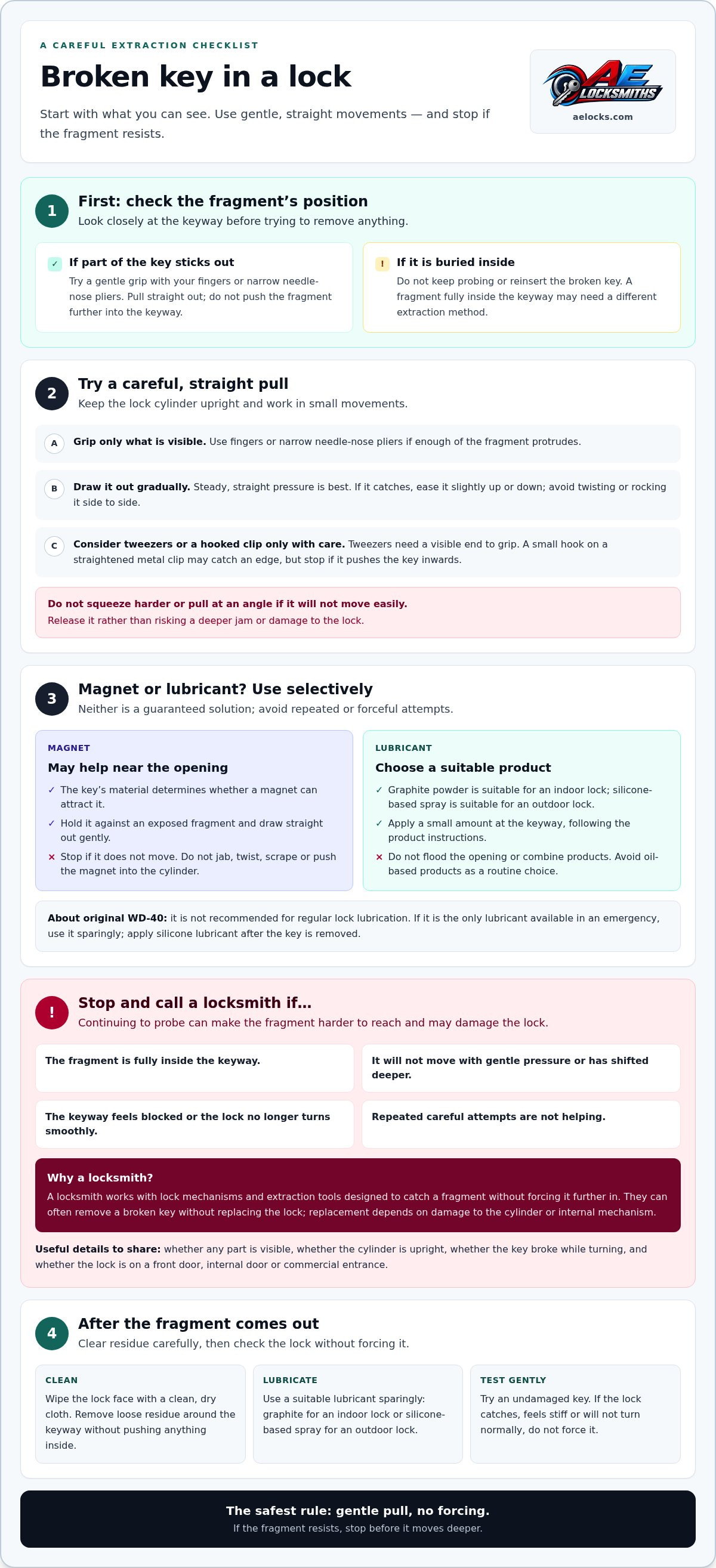
A magnet may help remove a broken key, but it isn’t a reliable first choice. If you’re figuring out how to get a broken key out of a lock, first check whether any part of it sticks out. You can try gripping the exposed end with your fingers or needle-nose pliers, but don’t push it further into the keyway.
When a key snaps, it’s tempting to keep tugging, especially if you need to secure the door. A gentle attempt may work, but forcing the fragment or using the wrong tool can make it harder to remove and may damage the lock.
This guide explains when a magnet might help, how to try fingers or needle-nose pliers carefully, and when to stop and call a locksmith. You’ll also learn how to avoid pushing the fragment deeper and what to do if it won’t come out without force.
Key Takeaways
- A magnet may help with some key materials, but it won’t work for every broken key, so don’t rely on it as your only option.
- If a fragment is sticking out, try a careful, straight pull with your fingers or needle-nose pliers rather than pushing it further into the keyway.
- Choose a suitable lubricant for the lock and avoid forceful methods that could leave the mechanism harder to repair.
- A broken-key extractor works by catching the fragment inside the keyway, but the right approach depends on the lock and how deeply the key is lodged.
- Stop if the fragment won’t move easily or is fully inside the lock; a locksmith can remove it while helping avoid damage.
Can a magnet pull a broken key out of a lock?
- Check the key material before relying on a magnet. A strong magnet may catch a fragment made of magnetic metal, but it won’t attract every key. Some keys are made from cobalt or nickel, so the key’s actual material determines whether this method has a chance of working. Hold the magnet against the exposed fragment and draw it straight out gently. If the key doesn’t move, stop rather than pushing or scraping it with the magnet.
- Lubricate the keyway before trying another extraction attempt. A suitable dry lubricant, such as graphite powder, or a silicone-based spray can reduce friction inside the lock. Apply a small amount at the keyway opening, following the product instructions, and allow it to reach the fragment. Silicone-based lubricant is suitable for an outdoor lock. Avoid flooding the opening: excess product can make the broken piece harder to grip and leave residue around the lock.
- Choose the lubricant carefully. Oil-based products can gum up lock internals and affect the mechanism over time, so avoid them as your routine choice. Original WD-40 isn’t recommended as a lock lubricant for regular use. If it’s the only lubricant available during an emergency, it can be used sparingly, but apply silicone lubricant after removing the key. Don’t combine products in the keyway. Use one suitable lubricant at a time, and keep sprays away from surrounding surfaces.
- Try the magnet again only after lubrication, keeping the pull straight. This method is more likely to work when the fragment is close to the opening and the magnet can grip it. If it sits deep in the keyway, a magnet may not reach or hold it securely. Don’t jab a magnetic tool into the cylinder, twist it, or keep pulling if the fragment resists. A thin extractor designed to catch the key may be more suitable than repeated attempts with a magnet.
- Clean and lubricate the lock after the fragment comes out. Wipe the lock face with a clean, dry cloth and remove loose residue around the keyway without pushing anything inside. Apply a suitable lock lubricant sparingly, using graphite for an indoor lock or silicone-based spray for an outdoor lock. Then test the lock gently with an undamaged key. If it still catches, feels stiff, or won’t turn normally, don’t force it. The broken key may have left debris or revealed a problem inside the mechanism.
Removing the key with fingers or needle-nose pliers
Try a careful manual extraction only when you can see or grip the fragment. Work in small movements and stop if the key shifts deeper.
-
Check whether you can remove it yourself
Look closely at the keyway to see whether any metal projects beyond the lock face. A fragment you can grip may be suitable for a gentle attempt; one buried inside needs a different method. Keep the lock cylinder upright, and don’t insert the broken key again. Reinserting it can push the fragment further into the lock.
-
Grip the fragment with fingers or pliers
If enough of the key protrudes, grip its end with your fingers or narrow needle-nose pliers. Pull straight out with steady pressure, easing the fragment slightly up or down if it catches. Avoid twisting or rocking it side to side, which can jam it against the keyway. If it won’t move easily, release it rather than squeezing harder or pulling at an angle.
-
Try a hooked clip or tweezers
Use tweezers only when enough of the key sticks out to grip. Position the tips around the visible end, then draw the fragment out gradually without pushing the tips deeper. If the fragment doesn’t protrude, straighten a metal clip and bend a small hook at its end. Carefully place the hook beside the key to catch an edge, then pull gently. Stop if the clip pushes the fragment inwards.
- Reassess the fragment’s position after each attempt. If it has moved closer to the opening, use your fingers or pliers rather than inserting another tool. If it hasn’t shifted, return it towards the position it occupied when the key was inserted. You can also press gently on the face of the lock plug while drawing the fragment out. Keep the pressure light: don’t force the plug or use the broken key’s remaining half to push.
- Don’t use a magnet as a substitute for a secure grip. It may attract some key materials, but it won’t work on every fragment, and a weak hold can leave the key stuck. If the end remains inaccessible or repeated attempts aren’t helping, stop before the fragment moves deeper. A professional locksmith for a stuck key can assess the lock and remove the fragment with suitable tools.
When to call a locksmith
A locksmith can often extract a broken key without replacing the lock. Replacement depends on whether the cylinder or internal mechanism is damaged.
- Stop if the fragment is fully inside the keyway, won’t move with gentle pressure, or has shifted deeper. Repeated probing can make the key harder to reach and may damage the lock core. Call a locksmith if the fragment is inaccessible, the keyway feels blocked, or the lock no longer turns smoothly after removal.
- Choose a locksmith rather than a general handyperson when metal needs to be extracted from a lock cylinder. A locksmith works with lock mechanisms and extraction tools designed to catch a key fragment without forcing it further in. A handyperson may be suitable for general repairs, but improvised tools can make this specific problem worse. Relevant experience with locks matters more than simply being able to handle small tools.
- Tell the locksmith what happened and describe the key’s position. Explain whether part of it is visible, whether the cylinder is upright, and whether the key broke while turning. Mention if the lock is on a front door, internal door, or commercial entrance. These details help identify the type of cylinder and the likely access needed before work begins.
- Consider why the key snapped, especially if it was bent, worn, or damaged before entering the lock. A worn cylinder, dirt or debris in the keyway, corrosion, or a poorly cut key can make turning difficult and increase strain on the key. If the lock has been stiff for some time, tell the locksmith. Removing the fragment alone may not address the underlying cause.
- Call a locksmith when you need the door secured and home methods haven’t worked. This is particularly important if the fragment sits deep in a residential or commercial lock, or if the cylinder is damaged and the key won’t turn. Keep both broken pieces for inspection. They may help identify the original key shape and show whether the break looks consistent with wear or damage.
Lock types and extraction considerations
Identify the lock type and fragment position before choosing a tool. Knowing how to get a broken key out of a lock starts with avoiding pressure that could drive it deeper.
-
Assess the lock and broken key
Look at the lock face and check whether the fragment protrudes or sits fully inside. Note whether the cylinder is upright and whether the key snapped while turning or was already stuck. Don’t rotate the cylinder or insert the remaining piece of the key. A padlock may be positioned with its keyway facing down, but a fixed front-door cylinder needs to be handled differently.
-
Choose tools for extraction
Choose a tool that fits beside the fragment without forcing it. Needle-nose pliers suit a visible end; a thin extractor can reach a key lodged inside. A thin jigsaw or mini hacksaw blade is sometimes used as a makeshift extractor, but its teeth can catch the lock. Avoid thick blades or screwdrivers that fill the keyway and push the fragment further in.
-
Use a specialist key extractor
Choose a broken-key extractor designed to slide alongside the key’s bitting, the notched edge that matches the lock. Carefully insert its hook beside the fragment, then angle it to catch a notch. Once it engages, pull the tool back gently. Don’t twist hard or lever against the cylinder. If the hook slips, withdraw it and reassess rather than forcing it further inside.
-
Extract a fragment fully inside the lock
The safest way to get a broken key out of a lock depends on the fragment’s position and the cylinder type. A specialist extractor may catch a fragment fully inside: guide its hook alongside the bitting, then draw it out gently. A removable padlock cylinder may be positioned with its keyway facing down so gravity can help. Don’t strike a fixed lock, as excessive tapping may damage its core. If the fragment won’t shift, stop and call a locksmith.
Other methods are sometimes suggested, but the priority is always to avoid force. A strong magnet may help remove a broken key if the metal is magnetic. Using ice to remove a broken key is less effective in colder weather, so it may be a poor choice in those conditions. Don’t let either approach lead to repeated pressure on the cylinder if the fragment remains in place.
The page also describes melting the end of a silicone bar, pressing it onto the lock, and pulling carefully once the glue hardens to try to extract the key. It advises against using super glue for this task because it could further damage the lock or leave an object stuck inside it. For lubrication, the guide advises against using original WD-40 because it can affect the lock mechanism’s long-term performance. If an approach does not release the fragment with a careful pull, stop rather than forcing it further inside.
Avoid pushing the broken key further into the lock
The key rule is simple: don’t insert anything that presses the fragment deeper. Check its position first, then choose a method that draws it towards the opening.
- Pause before touching the lock and inspect the keyway. Note whether metal is visible, whether the cylinder is upright, and which direction the fragment faces. This quick check helps prevent pushing the piece further inside by mistake. Don’t reinsert the remaining half of the broken key to test the lock; it can drive the fragment deeper and make removal harder.
- Keep the lock cylinder steady rather than turning it repeatedly. A fragment may be easier to catch when the jagged or cut edge sits at the top of the cylinder. If the cylinder moves freely, carefully adjusting the fragment’s position may help align the edge. Don’t force it into position: pressure can shift the key further into the mechanism.
- Use fingers or needle-nose pliers only if enough of the key end protrudes for a secure grip. Pull straight towards you with controlled pressure. Don’t squeeze so hard that the fragment slips from the pliers, and avoid rocking it from side to side. If the key moves inwards during the attempt, stop and reassess instead of pulling harder.
- Choose a thin extraction tool for a fragment inside the keyway. A broken-key extractor is designed to pass alongside the key’s bitting and catch an edge with its hook. Guide it carefully, then draw it out once it engages. Don’t use a thick tool, screwdriver, or unsteady needle that fills the gap and pushes against the fragment.
- Check the fragment’s position after every gentle attempt. If it’s closer to the opening, switch to pliers or fingers rather than inserting another tool. If it has moved deeper, don’t keep probing. The next step depends on how far inside it sits and whether the cylinder is damaged. Repeated attempts can leave the key beyond reach or harm the lock core.
- Stop when you can’t reach the fragment without force, or when the cylinder no longer turns normally. A locksmith has extraction tools suited to different lock positions and can assess whether the mechanism needs attention after removal. For help with a fragment that won’t come out, contact a locksmith about a broken key rather than pushing it further into the lock.
AE Locksmiths: Residential Locksmith
AE Locksmiths can help when a broken key is lodged in a residential or commercial lock and careful home attempts haven’t worked. A locksmith can assess the fragment and lock, then work to remove the key without forcing it further into the mechanism.
AE Locksmiths provides residential and commercial locksmith services, including 24-hour emergency lockout services across Merseyside and surrounding areas. If a snapped key has left you unable to secure or access your property, professional help can address the immediate lock problem. For related issues with a uPVC door or window, AE Locksmiths also offers UPVC Windows & Doors.
Contact AE Locksmiths or visit aelocks.com to discuss the broken key and lock.
Make the next move with confidence
A snapped key is also a reason to consider how reliably the door works. Before using it as normal, note whether the lock turns smoothly and whether the key felt stiff before it broke. These details can help guide the next step, especially if the lock is still difficult to operate.
If you’re deciding how to get a broken key out of a lock without risking further damage, stop once careful removal attempts aren’t working. AE Locksmiths offers residential and commercial locksmith services, alongside UPVC Windows & Doors, to help with related lock and door concerns.
Contact AE Locksmiths for help and explain what happened to the key and how the lock behaves now. A clear account helps you move towards a practical solution and feel more settled about securing your door.
Frequently Asked Questions
Can I remove a broken key from a door myself?
Yes, if part of the key is accessible and comes free with a gentle pull. Use fingers or narrow pliers to grip the exposed end, keeping your hand aligned with the keyway. Don’t use the remaining key half to push or turn the fragment. If the key is fully inside, the lock is stiff, or your tool starts driving the piece deeper, stop before the cylinder is damaged.
Can you use super glue to get a broken key out of a lock?
No, super glue is a poor choice for key extraction. Glue can spread from the visible fragment onto the lock face or inside the keyway, leaving the key or another object stuck in place. Even a small spill can complicate removal. Keep adhesives away from the cylinder, and use a suitable extraction tool only if the fragment is reachable without force.
How much does it cost to get a broken key out of a door lock?
The cost depends on the lock type, how accessible the fragment is, and whether the cylinder needs repair after extraction. A key visible at the opening presents a different job from one lodged deep inside a damaged mechanism. The price is provided after a quote request. For a Liverpool property, describe the lock and the fragment’s position when requesting a quote.
What should I do with my broken key?
Keep both pieces together in a safe place, such as a small envelope. A locksmith can compare the pieces, which may help with cutting a replacement key. Don’t glue them together or use a jagged piece in the lock again. If the key snapped after becoming difficult to turn, keep the pieces for inspection and mention the stiffness when arranging the repair.
Why did my key get stuck in the lock?
A key can catch because it’s bent, worn, damaged, or poorly copied. Dirt, debris, corrosion, and wear inside the cylinder can also interfere with movement. In a Liverpool home, for example, a key that has gradually become harder to turn points to a problem worth addressing, rather than forcing it each time. Stop using a key that catches repeatedly; continued pressure can make it snap.
What tools can remove a broken key from a lock?
For an exposed fragment, needle-nose pliers or tweezers can provide a careful grip. A broken-key extractor has a narrow shaft and hook that catches the key’s notched edge inside the keyway. A straightened metal clip with a small hook is another improvised option, but it needs careful handling. Choose a tool that fits beside the fragment; don’t force thick or sharp objects into the cylinder.


