

Could the cheapest-looking lock-change quote include work you don’t need? If you’re searching for “how much to change locks on new house UK”, the answer depends on the locks already fitted, the number of doors and the work required. It’s also natural to wonder who else might still have a key after you move in.
A headline price can’t tell you what your doors need. One lock may need replacing, another may need a repair, and a compatible cylinder may be all that’s required elsewhere. These options involve different work, so a useful quote explains what is included and which problem it addresses.
This guide explains what affects the cost, which entrances to prioritise and how to compare the work proposed. You’ll also learn when a cylinder change may be enough, what to clarify in a quote and how planned lock changes can help you take control of access to your new home.
Key Takeaways
- How much to change locks on new house UK depends on the lock type, number of doors and work needed. Details about your property matter more than a headline price.
- Prioritise the doors you use to enter your home and consider who may still have keys, including former occupants and people who had access during the sale or tenancy.
- Compare full lock replacement, cylinder changes and repairs by the problem each option addresses and the work included.
- Before discussing the job, note each door’s lock type and any issues, such as stiffness or difficulty locking. This makes quotes easier to compare.
- AE Locksmiths is a family-run Liverpool locksmith serving residential customers across Liverpool and surrounding areas. It charges no call-out fees or VAT.
Why change the locks when you move into a new house in the UK?
How can you know who still has keys to your new home? The set handed over on completion or at the end of a tenancy shows what the seller or landlord provided, but it can’t tell you how many spare keys were made over the years. Previous owners may have shared copies with household members, trusted friends or tradespeople. That doesn’t mean anyone has acted improperly. It simply means you may not know the full history of the keys.
Changing a lock means old keys no longer operate that lock. For an ordinary move, changing locks is a security choice, not an automatic legal requirement. You can weigh uncertainty about existing keys against the condition and suitability of the hardware already fitted. This also helps clarify how much to change locks on new house UK, because the work depends on which doors and locks you decide to address.
Who might still have keys to a new home?
Think about anyone who may have been given a spare during the property’s previous ownership or tenancy. This could include former owners or tenants, their relatives, housemates, cleaners, contractors or neighbours asked to keep a key. The number of keys returned at handover can’t tell you whether other copies exist or where they went. Changing a lock is a practical way to take control of access, without assuming that a previous occupant or keyholder has misused a copy.
Which doors should a new homeowner assess first?
Start with entrances that give direct access to the home. Walk around the property and note each door, the lock fitted and whether it works smoothly. The main entrance is an obvious priority, but it may not be the only route worth considering.
- Back and side doors: Include these if they provide direct access, even if you use them less often.
- Accessible outbuildings: Consider a garage, shed or other building if it contains valuables or provides a route towards the house.
- Other access points: Record doors with damaged, stiff or unreliable hardware so they can be assessed alongside your security priorities.
Door construction and existing hardware affect which work is suitable. A uPVC or composite door, for example, may have different locking hardware from a timber door. A change may therefore involve a different component or approach. This overview of types of locks and their security can help explain why locks aren’t all interchangeable. Don’t assume every entrance needs a full replacement. Note what is fitted and any problems you’ve noticed.
This check gives you a useful starting point: which doors matter most, what hardware is already there and where you’re uncertain about key control. Those details help shape a proportionate plan for the property, rather than changing locks without considering the actual access points.
What affects the cost to change locks on a new house?
A reliable quote depends on the property, the locks fitted and the work involved. Two homes with the same number of external doors can need different work if one has straightforward, working locks and the other has worn, damaged or poorly aligned hardware. A headline figure alone may not describe what your own job requires.
The quote should make clear what relates to parts, labour and any additional work. If an issue becomes apparent during the assessment, the reason for changing the scope should be explained before the work proceeds. This helps you compare like-for-like proposals rather than treating every lock change as the same task.
How lock type and door hardware affect the work
A euro cylinder is the key-operated component commonly found in some uPVC and composite door setups. A mortice lock sits within a cut-out in the door, often on timber doors. These are different types of hardware, and one isn’t a universal substitute for the other. The door and lock already fitted determine what replacement is suitable.
On a uPVC door, a stiff or unreliable handle may indicate an issue beyond the cylinder, so the wider multipoint mechanism may need assessment. Some insurers specify a BS 3621-compliant lock for certain doors, but policy requirements vary. Check your own policy wording rather than assuming one standard applies to every property.
Why the number of locks and job scope matter
Changing a lock on one entrance is a narrower job than changing locks across several external doors. Each additional door brings its own hardware and condition to assess. Worn components, damage or parts that don’t suit the existing door can also change the work needed, so the number of locks alone won’t tell the whole story.
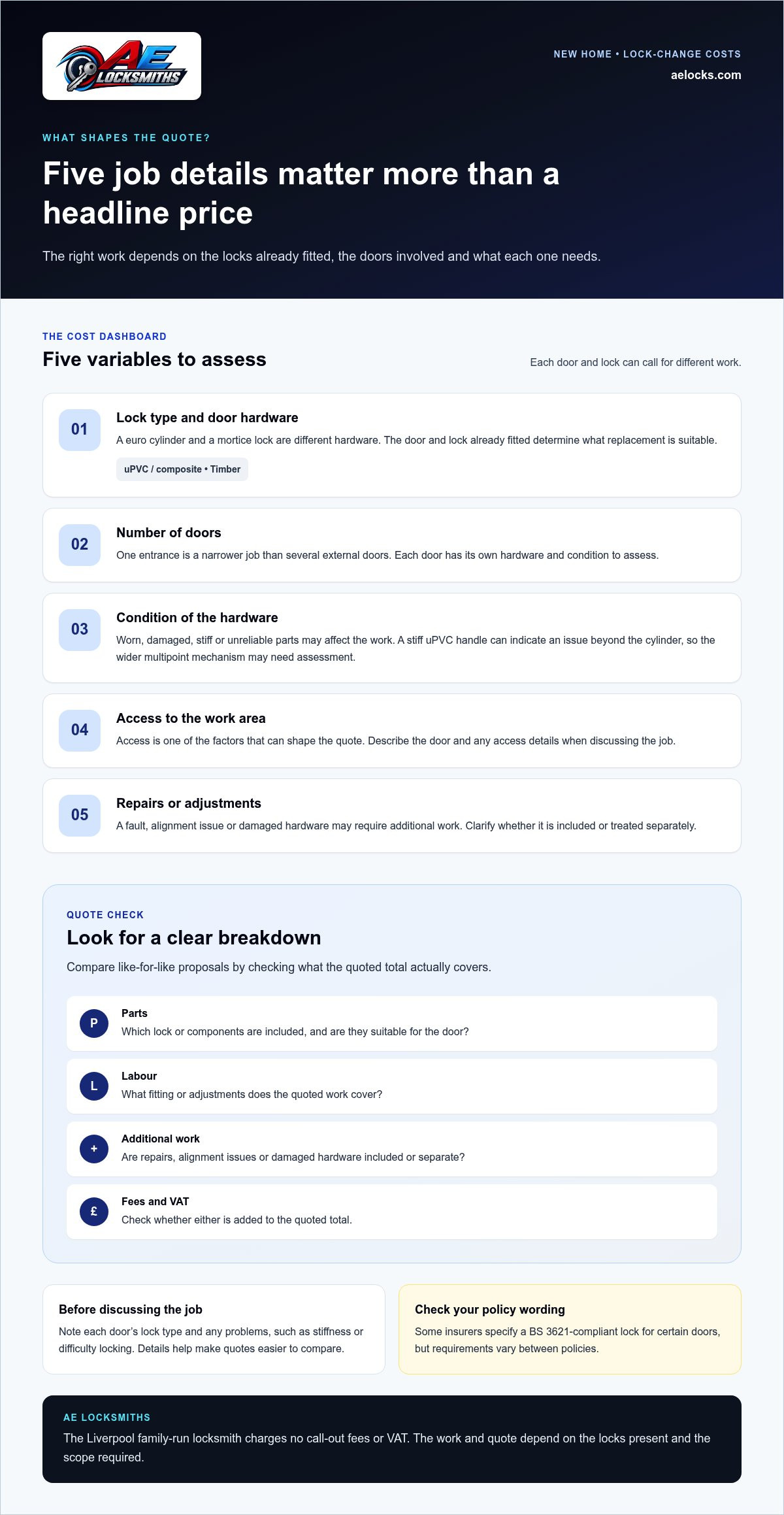
The main variables shaping a lock-change quote are the lock type, number of doors, hardware condition, access to the work area and any additional repairs or adjustments required.
For a useful comparison, look for a clear breakdown that identifies:
- Parts: Which lock or components are included, and whether the proposed replacement suits the door.
- Labour: What fitting or adjustments the quoted work covers.
- Additional work: Whether addressing a fault, alignment issue or damaged hardware is included or treated separately.
- Fees and VAT: Whether either is added to the quoted total.
AE Locksmiths charges no call-out fees or VAT. The work and quote depend on the locks present and the scope required, so a clear description of each door and its symptoms helps set expectations. For planned residential lock replacement, AE Locksmiths’ lock replacement service helps homeowners in its service area secure their properties.
Lock replacement, cylinder change or repair: which option suits your new home?
A new set of keys doesn’t always mean every part of a door lock needs replacing. The right option depends on what you want to achieve and how the existing hardware works. A cylinder change can alter which keys operate a compatible lock, while a repair may resolve a fault without replacing the whole assembly. Full replacement is a broader option when the lock is damaged or unsuitable.
A locksmith should assess the lock and door before recommending work. The table gives a general comparison, but the actual scope depends on the hardware fitted and its condition.
| Option | Problem it addresses | Likely scope and limitation |
|---|---|---|
| Full lock replacement | The lock is damaged, failing or unsuitable for the door or your security needs. | The lock assembly is replaced. The door and existing fittings affect what can be fitted. |
| Cylinder change | You want to change key access, and the existing lock body is working. | The cylinder is changed, not every lock component. It’s only suitable where the lock has a compatible, replaceable cylinder. |
| Repair | A fault, such as stiffness or unreliable operation, affects the lock. | The faulty part or adjustment may be addressed while retaining usable hardware. Repair won’t necessarily change which keys operate the lock. |
When might a cylinder change be enough?
If the lock body operates properly and your main aim is to stop the old keys working, a cylinder change may be suitable. It changes the key-operated part without replacing every component. However, the cylinder must fit the existing door hardware, and some lock types don’t allow a straightforward cylinder-only change. An assessment can establish whether this option is practical for your door.
When might full replacement or repair be more suitable?
A damaged, failing or unsuitable lock may need full replacement rather than a cylinder change. If the key turns poorly or the lock doesn’t operate reliably, the cause may instead be a fault that can be repaired or adjusted. These symptoms don’t identify the cause on their own. The recommendation should follow an assessment of the specific lock and door.
Think about the outcome you need before deciding: are you changing who can enter, addressing a fault or upgrading hardware that no longer suits the door? If you are considering modernising with keyless entry, browsing platforms like andigitallock.com can give you an overview of how digital locks and smart entrance solutions operate. These aims can call for different work. A replacement quote should identify the lock components being changed, while a repair quote should describe the fault being addressed. That makes it easier to understand what the proposed work will and won’t resolve.
For a new homeowner, changing key access may be the priority, but it’s worth separating that goal from any mechanical issue. A cylinder change may address access without resolving a stiff handle or wider mechanism fault. Likewise, repairing a fault may leave existing keys in use. If you’re weighing up how much to change locks on new house UK, first establish what each door needs, then compare quotes for the same scope of work.
How to compare a locksmith quote for changing house locks
A useful quote starts with a clear description of the job. Before comparing totals, make sure each quote covers the same doors and type of work. A price for changing one cylinder isn’t directly comparable with a quote to replace several complete locks or repair a faulty mechanism.
What information helps produce a useful quote?
Walk around the property and note which doors need attention, what hardware you can identify and any problems you’ve noticed. A clear description helps establish whether you’re planning a security change or dealing with a fault that needs diagnosis. Keep an urgent lockout separate from planned work, as the circumstances and scope may differ.
Use this checklist to make the details easier to compare:
- List the doors. Record each entrance you want included, such as the front, back and side doors. Note separately any outbuilding doors that need attention.
- Describe the hardware. Where possible, say whether the door is timber, uPVC or composite, and describe the visible lock. If you’re unsure of its name, a plain description is still useful.
- Explain the symptoms. Note whether a key sticks, a handle feels stiff, the lock fails to engage or the hardware appears damaged. Avoid guessing at the cause.
- State the goal. Say whether you want to change who has access, replace unsuitable or damaged hardware, or resolve a fault. These may call for different work.
- Compare like for like. Check that each quote covers the same doors and proposed outcome before comparing totals.
Which quote details should be clear?
Look for a plain-language description of the proposed work and the parts included. It should be clear whether the locksmith is changing a cylinder, replacing a complete lock or addressing a fault, and whether labour is included. If extra work may be needed, the quote should distinguish it from the original scope so you can understand what the stated total covers.
Also check whether additional charges or VAT are included rather than assuming a headline figure is the final amount. AE Locksmiths charges no call-out fees or VAT. Its quote for planned residential lock work depends on the existing hardware and agreed scope, so describe each door and its symptoms as accurately as you can.
With those details to hand, you can assess how much to change locks on new house UK by comparing the actual work, not just the first figure you see. To arrange a residential lock assessment and discuss the work needed, contact AE Locksmiths about changing your house locks.
Changing locks in Liverpool and Merseyside: arranging the work with AE Locksmiths
AE Locksmiths is an independent, family-run locksmith based in Liverpool, serving residential customers in Liverpool, Warrington, Wirral, St Helens, Widnes, Chester and Northwich. For a planned lock change, the aim is to understand what’s fitted, what you want to achieve and what work the property needs. That gives you a clearer basis for agreeing the job than choosing work from a headline price alone.
What to expect when arranging a planned lock change
Start by describing the property, the doors you want secured and any problems you’ve noticed. A locksmith assesses the existing locks and door hardware, then explains suitable work and agrees its scope with you before completing it. The right approach depends on the locks and doors at your home. AE Locksmiths provides a 12-month guarantee on parts. This applies to parts, not a stated guarantee on labour.
It helps to have a simple list ready: which doors are included, what type of door each has, whether the lock works smoothly and whether your goal is to change key access or address a fault. If you’re unsure what kind of lock is fitted, describe what you can see rather than trying to diagnose it. The assessment can establish which components are involved and whether the required work is a replacement, cylinder change or repair.
A local residential locksmith for Liverpool and surrounding areas
AE Locksmiths serves homeowners across Liverpool, Warrington, Wirral, St Helens, Widnes, Chester and Northwich. The business charges no call-out fees or VAT. The work is tailored to the existing hardware and agreed scope, so the quote should describe what will be done at the relevant doors.
For background on local residential locksmith work, the Residential Locksmith Liverpool article is a related resource. If you’re locked out and need urgent help, the Emergency Locksmith Liverpool article is the relevant next step. These are different situations: a planned change is arranged around the locks and work required, while a lockout needs attention to immediate access.
If you’re still weighing up how much to change locks on new house UK, focus on the specific doors and work included in the quote. A clear discussion can help you decide what to prioritise, whether all external locks need attention or only particular entrances. Visit the AE Locksmiths website to discuss securing your new home and arranging a residential lock change.
Take the next step towards a more secure home
Once you’ve decided which doors need attention, turn that plan into a clear scope of work. Knowing how much to change locks on new house UK starts with matching the work to your doors and hardware, rather than paying for changes that don’t address your needs.
Before arranging the work, note any questions about access, the proposed replacement or how the finished locks will operate. A straightforward discussion can help you understand what’s being changed and why. You don’t need to identify every lock component yourself. Explain what you want to achieve and describe any issues you’ve noticed.
AE Locksmiths can discuss a planned lock change for your home and the work involved. Arrange a lock change with AE Locksmiths and take a practical step towards feeling settled and secure in your new home.
Frequently Asked Questions
Is it worth changing the locks when you buy a new house?
It can be worthwhile if you want certainty over who can enter your home. You may not know whether spare keys were made or shared before the sale, even if the keys handed over seem complete. If you’re deciding how much to change locks on new house UK, consider how confident you are about the key history, which doors you rely on and whether the existing hardware is in good working order.
Can I change the locks in a rented property in the UK?
Check your tenancy agreement and get your landlord’s permission before arranging a lock change. The agreement may set out rules about alterations, access and providing replacement keys. For example, if you’re moving into a rented flat and want to change the front-door cylinder, agree in writing who will arrange the work and what happens to the new keys. This helps avoid disputes and ensures access arrangements are clear.
Does changing a lock mean replacing the whole lock?
No. Depending on the lock, a locksmith may be able to change only the cylinder, the part operated by the key, while leaving the rest of the lock in place. A full replacement changes a larger assembly, while a repair addresses a fault. For example, changing a suitable cylinder may change which keys operate it, but it won’t fix a separate problem with a stiff handle or mechanism.
Do locks have to meet BS3621 by law in the UK?
BS 3621 isn’t a general legal requirement for every home lock in the UK. However, an insurer may specify a particular standard for certain doors in your policy. Check the wording that applies to your property, especially if you’re replacing a lock after moving in. Don’t assume that a lock meets the required standard just because it has several levers. Look for the exact specification stated in your policy.
Are locksmiths licensed in the UK?
There’s no general government licensing scheme for locksmiths in the UK, so a licence isn’t a universal legal requirement to do the work. Some locksmiths choose to join trade associations or other schemes, but membership is different from a government-issued licence. If you’re arranging work in Liverpool, Warrington or elsewhere in the local area, focus on getting a clear description of the work and its agreed scope.
What should happen to the old keys after a lock change?
Keys for a lock that has been changed should no longer operate that lock, but keys to other unchanged doors may still work. Keep track of which keys relate to which doors, then dispose of obsolete keys securely. Don’t leave them attached to anything that identifies your address. If you’re a tenant, follow the agreed arrangements with your landlord for handing over keys and documenting the change.


